
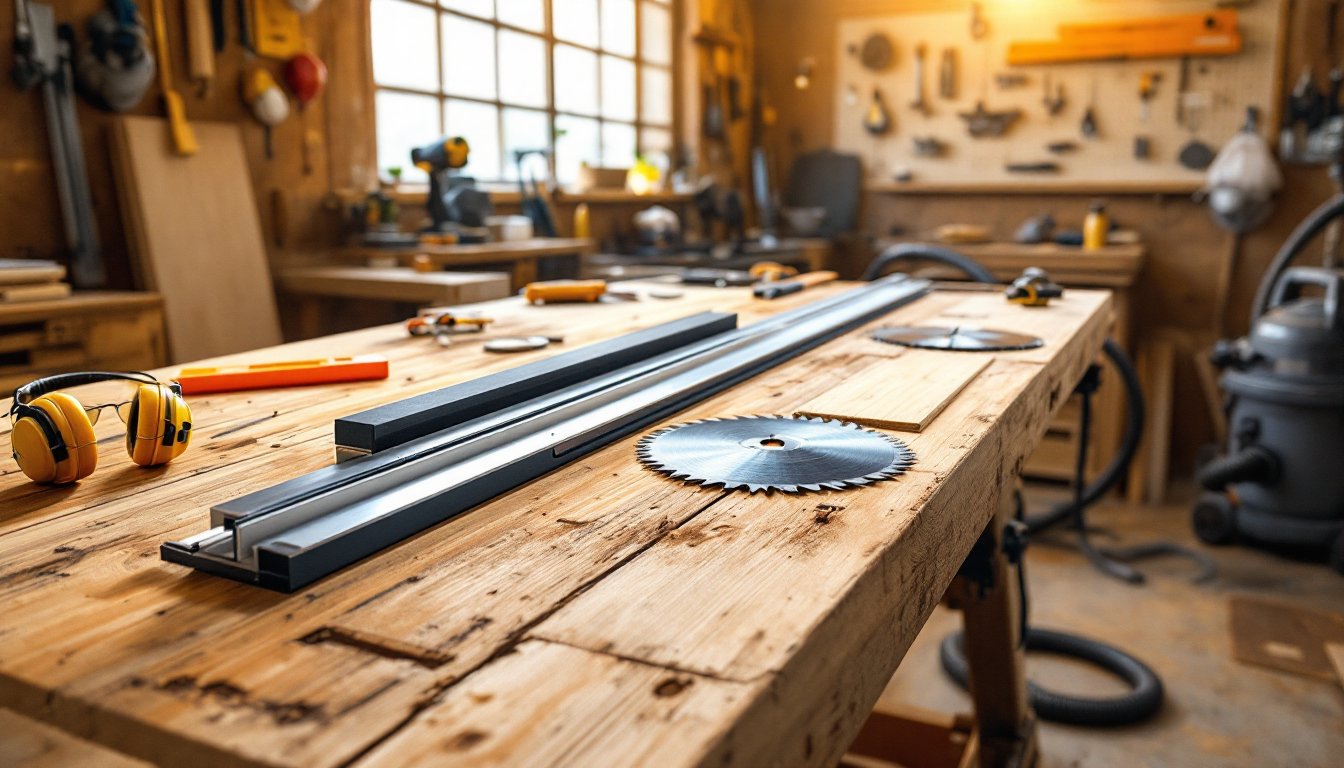
A circular saw is only as good as the accessories you pair it with. The right blade can mean the difference between a clean cut and a splintered mess. A quality guide transforms rough freehand cuts into precision work worthy of finish carpentry. And safety accessories? They’re non-negotiable if you plan to keep all ten fingers. Most DIYers invest in a decent saw, then skimp on the accessories, and wonder why their cuts look like they were made with a dull butter knife. This guide covers the essential circular saw accessories, circular saw attachments, and add-ons that’ll upgrade your cutting accuracy, expand what your saw can handle, and keep you safe while doing it.
Table of Contents
ToggleKey Takeaways
- The right circular saw accessories dramatically improve cutting accuracy, safety, and the lifespan of your saw by extending its capability beyond general-purpose tasks.
- Blade selection depends on tooth count and geometry: rip blades have 16-24 teeth for fast cuts along grain, crosscut blades have 40-80 teeth for smooth edges, and combination blades offer versatility.
- Track guide systems deliver table-saw-level precision for under $100, making them the most valuable upgrade for DIYers who want to eliminate the need for expensive stationary equipment.
- Specialty circular saw accessories like masonry blades and fiber cement blades require proper dust collection and respiratory protection due to serious health hazards from silica dust.
- Safety accessories including blade guards, hearing protection, and anti-kickback devices are non-negotiable when working with a tool spinning at 5,000+ RPM.
- A quality dust collection setup with a shop vac and upgraded dust port achieves 70-80% capture efficiency, protecting your workspace and lungs from harmful fine particulates.
Why the Right Circular Saw Accessories Matter
Stock circular saws come with a general-purpose blade that’ll cut dimensional lumber. That’s it. It’s the equivalent of owning one screwdriver bit and trying to tackle every fastener in your house.
Accessories extend your saw’s capability. A carbide-tipped masonry blade turns your circular saw into a concrete cutter for scoring paver edges or trimming fiber cement siding. A track guide system replicates the precision of a $400 table saw for under $100. And proper dust collection doesn’t just keep your workspace cleaner, it protects your lungs from silica dust and composite material particulates that cause long-term respiratory issues.
Most project failures aren’t due to lack of skill. They’re due to using the wrong tool or accessory for the task. A 24-tooth rip blade will tear out chunks when crosscutting plywood. A worn blade overheats, warps cuts, and increases kickback risk. The right accessories don’t just improve results, they make the work safer and less frustrating.
Quality accessories also extend the life of your saw. A blade with proper gullet depth clears chips efficiently, reducing motor strain. Anti-kickback pawls and riving knives (standard on many modern saws, but available as aftermarket add-ons for older models) prevent dangerous binding. Investing $150 in accessories can add years to a $200 saw.
Essential Blades for Every Cutting Task
Rip Blades vs. Crosscut Blades
Blade selection isn’t about quality alone, it’s about tooth count and geometry. Rip blades typically have 16-24 teeth and aggressive hook angles (the forward lean of each tooth). They’re designed to cut along the grain of lumber, clearing material quickly without overheating the motor. The large gullets (spaces between teeth) evacuate chips efficiently when cutting with the grain.
Crosscut blades have 40-80 teeth with shallower hook angles and smaller gullets. More teeth mean smoother cuts across the grain, which is critical for plywood, MDF, or any application where splintering ruins the finished edge. For trim work, cabinet construction, or any cut that’ll be visible, a 60-tooth crosscut blade is the baseline.
A combination blade (typically 40 teeth with alternating tooth geometry) splits the difference. It won’t rip as fast as a dedicated rip blade or crosscut as cleanly as an 80-tooth finish blade, but it handles both tasks competently. If you’re only buying one blade beyond the factory original, make it a quality 40-tooth combo blade with carbide tips.
Blade diameter matters, too. Most sidewinder saws use 7-1/4″ blades, which cut to a maximum depth of about 2-7/16″ at 90 degrees, enough for two stacked 2x4s (actual dimension: 1-1/2″ x 3-1/2″). Worm drive saws often accommodate the same diameter but deliver more torque for demanding cuts.
Specialty Blades for Metal, Masonry, and More
Once you move beyond wood, standard blades won’t cut it, literally. Metal-cutting blades feature carbide-tipped teeth (or abrasive discs for ferrous metals) and are designed for aluminum flashing, steel studs, or conduit. They spin at the same RPM as wood blades but generate significantly more heat, so slow, steady feed pressure is critical. Always wear a face shield and hearing protection, metal cutting throws hot sparks and screams louder than wood.
Masonry blades are abrasive discs (typically silicon carbide or diamond-segment) rated for concrete, brick, pavers, and fiber cement siding like HardiePlank. Diamond blades cost more but last longer and cut faster. When cutting masonry, wet cutting (a garden hose drizzle on the blade) reduces dust and extends blade life, but most circular saw setups don’t accommodate it easily. Dry cutting is standard, just expect to go through dust masks and plan for significant cleanup.
Fiber cement blades deserve their own mention. Products like those covered in popular renovation guides often specify diamond-tipped or polycrystalline diamond (PCD) blades for HardiePlank and similar materials. Standard wood blades dull almost immediately on fiber cement due to the silica content. Proper blades and dust extraction are non-negotiable here, silica dust is a serious health hazard.
Precision Guides and Cutting Aids
Freehand circular saw cuts are fine for rough framing, but anything visible demands guidance. The most versatile upgrade is a track guide system (also called a plunge saw track or guide rail). These aluminum extrusions clamp to your workpiece and feature a rubber strip that prevents slipping. The saw’s baseplate rides along the track, delivering table-saw-level straightness for rip cuts, crosscuts, and even angled bevels.
Track systems range from $60 budget models to $300+ setups with anti-splinter inserts and micro-adjustment clamps. For cutting full sheets of plywood, a track that spans at least 50″ is ideal, it’ll handle a 48″ crosscut with a couple inches of overhang. Many DIYers report that a track guide eliminates the need for a table saw in small shops, especially when paired with a quality crosscut blade.
Rip guides are simpler: a metal fence that clamps to your saw’s baseplate and rides along the edge of your workpiece. They’re included with most circular saws but often flimsy. Aftermarket versions with wider fences and better clamping mechanisms improve accuracy significantly. Rip guides work well for cutting down sheet goods when the factory edge is straight, but they’re useless if the reference edge is bowed or damaged.
For repetitive cuts, a circular saw crosscut jig built from scrap plywood and a straight 1×4 fence can be clamped across boards. Many workshop setup tutorials include plans for shop-made jigs that cost under $10 and rival commercial guides. The key is ensuring the fence is perfectly square to the saw’s cut line.
Speed squares aren’t accessories in the traditional sense, but they’re indispensable for marking and guiding angle cuts. A 7″ rafter square can guide your saw’s baseplate for quick 45-degree bevels or serve as a reference for marking stud layouts. It’s a $12 tool that belongs in every circular saw kit.
Safety Accessories You Shouldn’t Skip
Circular saws are among the most dangerous tools in a DIY arsenal. The blade spins at 5,000+ RPM, and kickback can send the saw (or the workpiece) flying. Accessories that reduce risk aren’t optional.
Blade guards are built into every modern circular saw, but many DIYers defeat them because they obscure the cut line or snag on the workpiece. Don’t. A stuck guard usually means the saw’s pivot is gummed up with sawdust, clean and lubricate it. If visibility is the issue, some aftermarket guards use clear polycarbonate instead of stamped metal.
Anti-kickback pawls and riving knives are standard on table saws but rare on circular saws. A riving knife (a thin metal fin behind the blade) keeps the kerf open and prevents the workpiece from pinching the blade, the primary cause of kickback. Some circular saw attachments and adapter plates add riving knife functionality, though they’re not common in the consumer market.
Hearing protection is non-negotiable. Circular saws produce 90-100 dB, enough to cause permanent hearing damage with repeated exposure. Foam earplugs (NRR 32) or over-ear muffs are cheap insurance.
Safety glasses with side shields (or a full face shield for metal/masonry work) protect against flying debris. Polycarbonate lenses resist impact better than glass or acrylic. If you wear prescription glasses, fit-over safety glasses or side shields that clip onto your frames are available.
Dust masks rated N95 or higher are essential for cutting treated lumber, MDF, or fiber cement. A standard paper mask doesn’t filter fine particulates. For heavy dust exposure (like cutting masonry), consider a reusable half-mask respirator with P100 cartridges. Your lungs will thank you in 20 years.
Dust Collection and Cleanup Solutions
Circular saws are dust factories. A single crosscut through a 2×4 generates a handful of sawdust: a sheet of MDF produces enough to coat your entire workspace. Dust isn’t just messy, it’s a health hazard and a fire risk.
Most circular saws have a dust port, a plastic shroud around the blade with a 1-1/4″ or 1-1/2″ outlet. Quality aftermarket dust ports with tapered adapters fit shop vacs and improve collection efficiency. The stock ports on budget saws often leak air and collect maybe 40% of dust. Upgraded ports with rubber gaskets and better blade coverage can hit 70-80% capture.
Pairing your saw with a shop vacuum rated for fine dust (HEPA filter recommended) dramatically reduces airborne particulates. Most DIYers use a 5-6 gallon wet/dry vac, which provides enough suction without being cumbersome. Models with auto-start (the vac powers on when the saw does) are worth the extra $30 if you’re cutting frequently.
For track saw users, many systems include dust extraction shrouds that seal around the blade and connect directly to the track. Combined with a vacuum, these setups achieve near-zero visible dust, critical for indoor work or cutting materials like fiber cement where silica dust is dangerous.
Anti-static hoses prevent dust from clinging to the hose interior due to static buildup (common with PVC hoses). They’re especially useful when cutting sheet goods that generate fine, clingy dust. A 10-foot anti-static hose costs around $25 and mates with standard shop vac fittings.
Finally, keep a push broom and dustpan in your work area. Even with good dust collection, you’ll have piles to sweep. Compressed air or a leaf blower is tempting for cleanup, but it just redistributes fine dust into the air, and your lungs. Sweep, then vacuum with a HEPA-filtered shop vac.
For those tackling larger tool-intensive projects, investing in a centralized dust collection system makes sense, but for most DIYers, a good shop vac and upgraded dust port cover 90% of needs.