
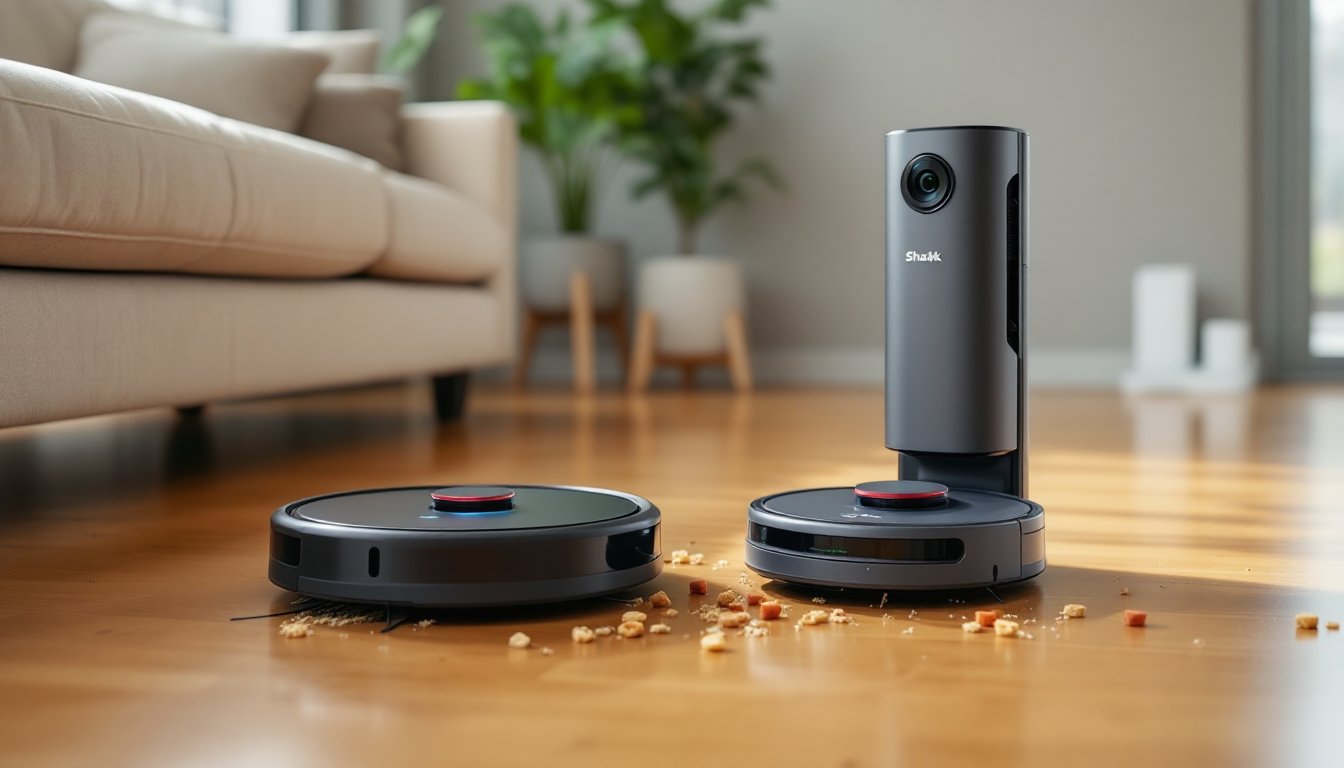
Robot vacuums have shifted from luxury gadgets to practical cleaning tools for busy homeowners. Two brands dominate the market: Shark and Roomba (made by iRobot). Both promise hands-free floor cleaning, but they approach the job differently, from navigation tech to dustbin design to price tags that can swing from $200 to over $1,000. If you’re deciding between a shark robot vacuum vs roomba, you need to know what separates a solid performer from a unit that’ll gather dust in the closet. This guide breaks down the real-world differences in cleaning power, smart features, maintenance, and value so you can pick the right robot for your floors, pets, and budget.
Table of Contents
ToggleKey Takeaways
- Shark robot vacuums offer competitive cleaning features at $200–$650, while Roomba models range from $275–$1,100+, with Shark delivering strong value for budget-conscious buyers but Roomba excelling in advanced obstacle detection and suction power.
- Roomba uses camera-based vSLAM navigation and delivers 2,500–4,000 Pa of suction with AI obstacle avoidance, whereas Shark relies on LiDAR mapping and 1,500–2,200 Pa suction, making Roomba better for cluttered homes with pets and Shark suitable for predictable layouts.
- Both shark vs roomba models require monthly maintenance including filter cleaning, weekly sensor wiping, and brush replacement every 3–6 months, with expected lifespans of 3–5 years when properly maintained.
- Shark includes more accessories out of the box (boundary strips, extra brushes, filters) and offers integrated mopping on select models, while Roomba requires a separate Braava mop unit but offers superior software integration with smart home ecosystems.
- Choose Shark for hard floors with mixed debris and moping needs, or select Roomba for thick carpet, high pet shedding, and homes with toys or clutter that require intelligent obstacle recognition.
What Are the Key Differences Between Shark and Roomba Robot Vacuums?
Shark and Roomba share the same core mission, automated vacuuming, but their engineering philosophies diverge in ways that affect daily use.
Roomba (iRobot) pioneered the robot vacuum category in 2002 and builds its reputation on advanced navigation and software. Higher-end Roomba models use vSLAM (visual simultaneous localization and mapping) via ceiling-mounted cameras or iAdapt sensors to map rooms and avoid obstacles. Roomba units typically feature dual multi-surface rubber brushes that adjust automatically to carpet and hard floors, reducing hair tangles. The brand invests heavily in AI and app connectivity, offering features like automatic dirt disposal bases, scheduled cleaning zones, and integration with Alexa and Google Assistant.
Shark entered the robot vacuum market later but gained traction by offering competitive features at lower price points. Shark robots often use LiDAR (light detection and ranging) or infrared sensors for navigation, combined with a self-cleaning brush roll designed to pull hair off the bristles automatically. Many Shark models include a bagless base with a larger dustbin capacity than Roomba’s standard bins, reducing how often you empty it. Shark also tends to package more accessories, boundary strips, extra filters, in the box.
The core trade-off: Roomba typically offers more refined software and obstacle avoidance, while Shark delivers similar hardware features for less money upfront.
Cleaning Performance: How Do Shark and Roomba Compare?
Cleaning power hinges on suction (measured in Pascals or Pa), brush design, and how well the robot adapts to different surfaces.
Roomba’s top-tier models (like the j7+ and s9+) deliver 2,500 to 4,000 Pa of suction and use dual rubber extractors instead of bristle brushes. This design excels on hard floors and minimizes hair wrap, critical if you have pets. The s9+ features a D-shaped body that gets into corners better than round models. Roomba’s Dirt Detect sensors recognize high-traffic zones and automatically boost suction, but the system can be overly cautious, sometimes re-cleaning already spotless areas.
Shark’s mid-range and flagship models (such as the Matrix and AI Ultra) offer 1,500 to 2,200 Pa suction, which is adequate for daily debris but trails Roomba on thick carpet. Shark’s self-cleaning brush roll uses a comb to strip hair off the bristles, reducing maintenance. Some Shark models also feature a sonic mopping pad for hard floors, whereas most Roombas require a separate Braava unit for mopping.
In side-by-side tests on hardwood and low-pile carpet, both brands pick up cereal, pet hair, and dust effectively. On plush carpet or embedded dirt, Roomba’s higher suction and adaptive brush pressure give it an edge. Shark holds its own on mixed flooring and adds mopping as a bonus.
PPE reminder: When emptying dustbins or changing filters, wear a dust mask if you have allergies or asthma, fine particulate matter can become airborne.
Navigation and Smart Features: Which Brand Offers Better Technology?
Navigation determines whether your robot cleans methodically or bumbles around like it’s chasing a toy shark across the floor.
Roomba relies on vSLAM or camera-based mapping in premium models, which creates a persistent map of your home and lets you define Keep Out Zones and Clean Zones in the iRobot app. The j7 series includes obstacle detection powered by AI image recognition, it can identify and avoid charging cables, pet waste, and shoes. This is useful if you have kids or pets that leave surprises on the floor. Roomba’s Imprint Smart Mapping syncs with the Braava jet mop, allowing coordinated vacuum-then-mop routines. The downside: camera-based navigation struggles in low light and requires clear ceiling views.
Shark uses LiDAR in its AI and Matrix lines, emitting laser pulses to map room dimensions and obstacles. LiDAR doesn’t rely on ambient light, so it works in dark rooms or under furniture. Shark’s app supports room labeling, no-go zones, and scheduling, but obstacle detection is less sophisticated, it won’t recognize a sock vs. a cable. Some Shark models include Matrix Clean, which runs multiple passes in a grid pattern to ensure full coverage, while others use a standard back-and-forth path.
Both brands integrate with Alexa and Google Assistant for voice control. Roomba’s ecosystem is more mature, with better third-party integrations (IFTTT, smart home routines). Shark’s app is simpler and faster to set up, which some users prefer.
If you have a cluttered home or pets, Roomba’s obstacle avoidance is worth the premium. If you have a predictable floor plan and want reliable mapping at a lower cost, Shark’s LiDAR does the job.
Price and Value: Getting the Most for Your Money
Price is where Shark draws a lot of converts. As of April 2026, Shark robot vacuums range from about $250 for entry-level models (Shark ION series) to $650 for flagship units (Matrix Plus, AI Ultra with self-empty base). Roomba starts around $275 for the basic 600 series and climbs to $1,100+ for the s9+ with Clean Base.
For a mid-range robot with self-emptying, you’ll pay roughly $400–$500 for Shark vs. $600–$800 for a comparable Roomba (j7+ or i7+). That $200–$300 gap buys you Roomba’s advanced obstacle avoidance and more polished software, but it doesn’t always translate to cleaner floors in everyday use.
Shark often includes more accessories out of the box: boundary strips, extra side brushes, and a second filter. Roomba’s packaging is leaner, and replacement parts (like the Clean Base bags or filters) cost more over time. Factor in $30–$50 annually for filters and brushes for either brand, plus $20–$30 for Roomba’s dirt disposal bags (if your model uses them).
Resale and longevity: Roomba holds its value better on the secondhand market, likely due to brand recognition. But, Shark’s newer models (2024–2026) show improved build quality, closing the durability gap.
If budget is tight and you want solid performance, Shark delivers strong value. If you want the most refined tech and can spare the extra cash, Roomba is the premium pick.
Maintenance and Durability: Long-Term Ownership Considerations
Robot vacuums need regular upkeep, skip it, and you’ll end up with a machine that barely moves or devours random objects instead of cleaning.
Roomba maintenance involves:
- Emptying the dustbin after every 1–2 runs (or weekly if you have a self-empty base)
- Cleaning or replacing the filter monthly (HEPA filters every 2–3 months)
- Wiping sensors and camera lens weekly
- Checking the dual rubber extractors for debris, these rarely tangle but can accumulate sticky residue
- Replacing side brushes every 3–6 months
Roomba’s rubber extractors are easier to clean than bristle brushes, especially with pet hair. The downside: rubber can crack or lose elasticity after 12–18 months of heavy use.
Shark maintenance includes:
- Emptying the dustbin (or base) weekly
- Cleaning the self-cleaning brush roll monthly, press the release button and pull hair off the comb
- Washing the foam and felt filters monthly (replacements every 3–4 months)
- Wiping cliff sensors and charging contacts weekly
- Replacing side brushes every 3–6 months
Shark’s self-cleaning brush roll reduces tangles but doesn’t eliminate them entirely. You’ll still need to trim hair with scissors occasionally.
Durability: Roomba units typically last 3–5 years with proper care. Battery degradation (around year 2–3) is the most common failure point: replacement batteries cost $50–$80. Shark robots also average 3–4 years, with similar battery lifespan. Both brands offer 1-year warranties: extended warranties are available but often aren’t cost-effective unless you have a large home and run the robot daily.
Safety note: Always unplug the charging dock before cleaning electrical contacts. Wear work gloves when handling filters or brush rolls if you have skin sensitivities.
Which Robot Vacuum Is Best for Different Home Types?
Matching a robot vacuum to your home layout and flooring prevents buyer’s remorse.
For small apartments or single-level condos (under 1,000 sq ft):
- Shark ION or Roomba 600/700 series handle this just fine. You don’t need advanced mapping for a studio or one-bedroom. Budget pick: Shark ION (~$250).
For multi-room homes with mixed flooring (1,000–2,500 sq ft):
- Shark Matrix or Roomba i7+ offer room mapping, scheduled zones, and self-emptying. Shark’s lower price makes it appealing here, but Roomba’s obstacle avoidance shines if you have kids dropping toys everywhere.
For homes with pets (especially shedders):
- Roomba j7+ or s9+ with rubber extractors and AI obstacle detection (to avoid pet accidents). Shark’s self-cleaning brush roll works, but Roomba’s anti-tangle design is more reliable long-term.
For homes with thick carpet or area rugs:
- Roomba s9+ delivers the highest suction (up to 4,000 Pa) and auto-adjusts brush height. Shark’s suction tops out around 2,200 Pa, which struggles on deep-pile.
For hard floors with occasional mopping:
- Shark AI Ultra with Matrix Clean and sonic mop gives you vacuum and mop in one unit. Roomba requires a separate Braava for mopping.
For cluttered homes or tight spaces:
- Roomba j7+ with obstacle detection. Shark’s navigation is good but won’t identify specific objects, it’ll bump and re-route.
If your home has multiple levels, buy a model that supports multi-floor mapping (Roomba i7+, j7+, s9+, or Shark Matrix/AI Ultra). You won’t need to buy separate units for upstairs and downstairs, just carry the robot and dock.
Conclusion
Choosing between Shark and Roomba comes down to budget and priorities. Roomba leads in obstacle detection, software polish, and suction power, ideal if you have pets, thick carpet, or a cluttered home. Shark offers competitive navigation and cleaning at a lower price, with perks like built-in mopping and self-cleaning brushrolls. Both brands require regular maintenance and will last 3–5 years with care. For most DIYers and homeowners, Shark delivers the best value for mixed flooring and everyday messes, while Roomba is the premium choice for those who want the most advanced tech and can justify the cost. Measure your space, check your flooring type, and pick the robot that fits your home, not just your wishlist.