
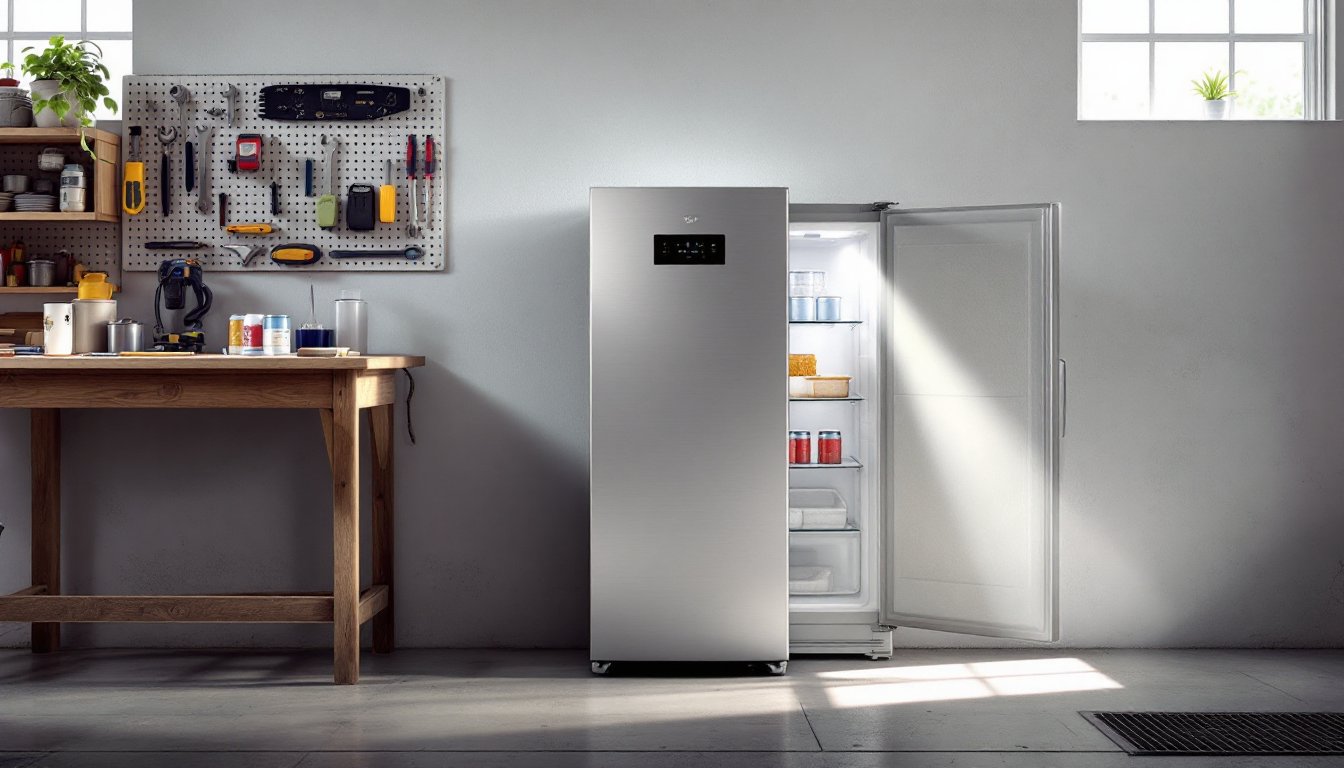
Tight on kitchen space? Need extra cold storage in your garage workshop, home office, or basement rec room? A Hisense compact refrigerator delivers reliable cooling without eating up square footage or cranking up your electric bill. These units aren’t just dorm-room afterthoughts, they’re engineered for energy efficiency, adjustable shelving, and quieter operation than many budget mini fridges. Whether you’re outfitting a backyard bar, keeping paint and adhesives at stable temps in your shop, or giving your teenager a snack station, a well-placed mini Hisense refrigerator solves storage headaches without requiring new cabinetry or a plumber. Here’s what you need to know before you buy, install, and maintain one.
Table of Contents
ToggleKey Takeaways
- A Hisense compact refrigerator uses compressor-based cooling and energy-efficient design to deliver reliable performance in workshops, offices, and basements without requiring major installation or excessive electricity costs.
- Hisense compact refrigerators feature reversible doors, adjustable shelves, LED lighting, and sound-dampened compressors that set them apart from budget mini fridges, with capacities ranging from 1.6 to 4.5 cubic feet to fit any space.
- Proper installation requires at least two inches of clearance behind the unit for airflow, a grounded outlet on a dedicated circuit, and a four-hour acclimation period after transport to prevent compressor damage.
- Regular maintenance—including quarterly condenser coil cleaning, monthly gasket inspection, and manual defrosting when needed—extends the lifespan of your Hisense compact refrigerator to 8–12 years of trouble-free operation.
- Hisense compact refrigerators cost $120 to $250 and consume roughly 200–240 kWh annually, making them significantly cheaper to own and operate than older non-rated mini fridges that can pull 400+ kWh per year.
Why Choose a Hisense Compact Refrigerator for Your Home
Hisense has spent decades manufacturing full-size appliances, and that engineering carries over to their compact line. You get compressor-based cooling, not the thermoelectric modules found in cheap college-dorm fridges, which means consistent interior temps even when your garage hits 90°F in August.
Build quality matters. Hisense units typically feature reversible doors, adjustable wire or glass shelves, and interior LED lighting. The door seals use magnetic gaskets that maintain a tight closure, reducing frost buildup and compressor runtime. If you’ve dealt with a noisy mini fridge that hums louder than your circular saw, you’ll appreciate the sound-dampened compressor mounts Hisense uses in most models.
Capacity options range from 1.6 to 4.5 cubic feet, so you can match the footprint to your available floor or countertop space. A 1.7 cu. ft. model fits under most standard 30-inch counters (check your actual clearance), while a 3.3 cu. ft. unit offers enough room for a week’s worth of beverages plus sandwich fixings. Most Hisense compact refrigerators include a small freezer compartment, useful for ice packs, frozen gel pads for jobsite injuries, or a pint of ice cream.
Price-to-performance is another draw. Expect to spend $120 to $250 depending on capacity and retailer promotions, significantly less than boutique brands. That leaves budget for a dedicated 15-amp circuit if your current wiring can’t handle the extra load (more on that in the installation section).
Top Features That Make Hisense Stand Out
Not all compact refrigerators are created equal. Hisense separates itself from the pack with a few key design choices.
Adjustable thermostat: Analog or digital controls let you dial temps between 32°F and 50°F, critical if you’re storing temperature-sensitive materials like epoxy resin or latex paint alongside drinks. Some cheaper models only offer “min-max” dials with no actual temperature readout.
Reversible door swing: Nearly every Hisense model ships with the door hinged on the right but includes hardware and instructions to flip it left-handed. This takes about ten minutes with a Phillips screwdriver and saves you from blocking a walkway or cabinet door.
Glass shelves vs. wire: Mid-tier and up models use tempered-glass shelves that support heavier items, think gallon jugs of pre-mixed joint compound or cases of canned goods. Glass also contains spills instead of letting them drip onto lower shelves. Wire shelves are lighter and allow better air circulation, but they’re harder to clean.
Freestanding or built-in flexibility: Most Hisense compact units are freestanding, meaning they vent heat through the back coil. You need at least two inches of clearance behind and above the unit for airflow. A few models specify built-in capability with front venting, confirm this in the spec sheet before boxing one into cabinetry.
Energy Efficiency and Eco-Friendly Design
Compact refrigerators can run 24/7, so efficiency adds up. Hisense models typically carry an Energy Star certification or meet DOE standards for low annual kilowatt-hour usage. A 1.7 cu. ft. unit consumes roughly 200–240 kWh per year, about $25 to $30 annually at the national average rate of 12 cents per kWh. Compare that to an older, non-rated mini fridge that can pull 400 kWh or more.
R600a refrigerant (isobutane) is standard across the Hisense compact line. It has near-zero ozone-depletion potential and a much lower global-warming potential than older HFC refrigerants. If you’re trying to reduce your home’s carbon footprint, this is a tangible step.
LED interior lighting draws a fraction of the wattage of incandescent bulbs and stays cooler, reducing the compressor’s workload. Some models also feature an auto-defrost cycle for the freezer compartment, though many smaller units still require manual defrosting every few months.
Best Hisense Compact Refrigerator Models for Different Spaces
Choosing the right model depends on your square footage, use case, and whether you need a freezer.
Hisense 1.7 Cu. Ft. (HRB171N6ASE): This is the workhorse for home offices, laundry rooms, or small workshops. Exterior dimensions run about 19.7″ W × 17.5″ D × 24.6″ H, so it tucks under counters or beside a workbench. The small freezer compartment holds a couple of ice trays or a cold pack. Independent tests from outlets covering mini-fridge performance highlight this model for consistent temps and low noise. It’s also one of the few at this price point with a reversible door and adjustable feet for leveling on uneven concrete shop floors.
Hisense 2.7 Cu. Ft. (RC27D6W): A mid-capacity option for garage gyms, guest suites, or craft rooms. You get two wire shelves plus a small crisper drawer, handy for keeping produce or lunch supplies separate from beverages. The larger freezer compartment can handle a frozen meal or two. Footprint is roughly 20.5″ W × 19.7″ D × 33.1″ H, still narrow enough for tight alcoves.
Hisense 3.3 Cu. Ft. (RR33D6ASE): The step-up for basements or poolside bars. Three glass shelves, a full-width door rack for gallon jugs, and a separate freezer that actually fits a standard ice-cube tray without bending it. The stainless-steel finish resists fingerprints better than painted black or white. Expect dimensions around 21.1″ W × 20.5″ D × 33.5″ H. This model pulls about 1.5 amps on startup, so confirm your outlet circuit isn’t already loaded with a table saw or air compressor.
Hisense 4.5 Cu. Ft. (RC46WG): The largest in the compact line, suitable for detached workshops, Airbnb kitchenettes, or mother-in-law suites. Four shelves, a proper crisper drawer, and a separate freezer with its own door seal. You can store a week’s worth of groceries or keep job-site lunches for a small crew. At 23.6″ W × 22.8″ D × 33.3″ H, it’s still narrower than a full-size fridge but requires more floor space than the 1.7 cu. ft. models.
For quick comparisons, several roundups of mini fridges feature Hisense models alongside competitors, highlighting real-world capacity and noise levels.
Installation Tips and Placement Ideas
A compact refrigerator isn’t complicated to set up, but skipping a few prep steps leads to premature compressor failure or tripped breakers.
Electrical requirements: Most Hisense compact units run on 115V, 60 Hz and draw 1.0 to 1.5 amps during normal operation, with a startup surge around 2 amps. Plug directly into a grounded three-prong outlet, skip the extension cords and power strips. If you’re installing in a garage or unfinished basement, verify the outlet is GFCI-protected per NEC 210.8. An electrician can add one for $75 to $150 if your current setup lacks it.
Clearance and ventilation: Leave at least two inches behind the unit and one inch on each side for airflow. The condenser coil (the black grid on the back) radiates heat: trap that heat and the compressor runs continuously, shortening its lifespan. If you’re sliding the fridge into an alcove or under a counter, measure the niche depth and add two inches, most Hisense models measure 18–23 inches deep.
Leveling: Adjustable front feet thread in or out. Use a torpedo level on top of the fridge and adjust until the bubble centers. A slight tilt backward (about ¼ inch over the depth) helps the door self-close and prevents meltwater from pooling in the crisper. Shim with rubber pads if the floor is badly out of level, concrete shop floors often slope toward a drain.
Acclimation: After transport, let the unit sit upright for at least four hours before plugging it in. This allows refrigerant and compressor oil to settle. Skipping this step can starve the compressor of lubrication on first startup.
Placement ideas:
- Workshop or garage: Keep drinks and snacks on hand without tracking sawdust into the house. Store temperature-sensitive adhesives, finishes, or sealants that require 50–70°F storage.
- Home office or studio: Grab lunch without breaking focus. A 1.7 cu. ft. model fits under most desks or beside a filing cabinet.
- Guest bedroom or in-law suite: Provide a mini kitchenette without running new plumbing. Pair with a microwave and coffee maker on a cart.
- Basement rec room or home theater: Stock beverages and frozen snacks within arm’s reach of the couch.
- Outdoor kitchen or patio bar: Choose a model with a stainless finish for corrosion resistance. Ensure the outlet is weatherproof and GFCI-protected: consider a covered alcove to shield the unit from direct rain.
Kitchen design experts at The Kitchn frequently recommend compact refrigerators as secondary storage in pantries or mudrooms, freeing up main-fridge space for meal prep.
Maintenance and Care for Long-Lasting Performance
A well-maintained compact refrigerator can run trouble-free for eight to twelve years. Neglect these tasks and you’ll be shopping for a replacement in three.
Defrosting the freezer compartment: If your model lacks auto-defrost (most sub-3 cu. ft. units don’t), frost will build up in the freezer. Once it exceeds ¼ inch thick, defrost manually. Unplug the unit, remove contents, leave the door open, and place towels underneath. A shallow pan catches meltwater. Never chip ice with a screwdriver or knife, you’ll puncture the evaporator coil and kill the fridge. Use a plastic spatula if you must.
Cleaning the condenser coil: The black coil on the back collects dust, pet hair, and workshop debris. Every three to six months, unplug the fridge, pull it away from the wall, and vacuum the coil with a brush attachment. Clogged coils force the compressor to work harder, spiking your electric bill and shortening its life.
Door gasket inspection: Wipe the rubber door seal monthly with warm, soapy water. Check for cracks or gaps by closing the door on a dollar bill, if you can pull it out easily, the seal isn’t tight. Most Hisense models use snap-in gaskets you can replace yourself for $15 to $30: order the part by model number.
Interior cleaning: Spills left unattended grow mold and odors. Every month, remove shelves and bins, wash with mild dish soap, and dry thoroughly. Wipe interior walls with a baking-soda solution (one tablespoon per quart of water) to neutralize smells without harsh chemicals. Avoid abrasive scrubbers on plastic liners.
Temperature monitoring: Keep a fridge thermometer ($5 at any hardware store) inside. The main compartment should hold 35–38°F: the freezer should stay at 0–5°F. If temps drift, adjust the thermostat and wait 24 hours before rechecking. Persistent warm temps signal a failing compressor or refrigerant leak, both require a technician.
Vacation mode: If you’re leaving the house for more than a week, empty perishables, unplug the unit, prop the door open with a towel, and clean it. A closed, unpowered fridge grows mildew fast.
Avoid overloading: Stuffing shelves blocks airflow and forces the compressor to cycle constantly. Leave space between items for cold air to circulate.
Conclusion
A Hisense compact refrigerator isn’t a compromise, it’s a purpose-built tool for spaces where a full-size fridge doesn’t fit or make sense. Match the capacity to your floor plan, ensure proper electrical and clearance, and keep the condenser coil clean. You’ll gain flexible cold storage that pays for itself in convenience and lower energy bills compared to older mini fridges. Whether you’re outfitting a workshop, home office, or guest suite, these units deliver reliable performance without the hassle of a major appliance install.