
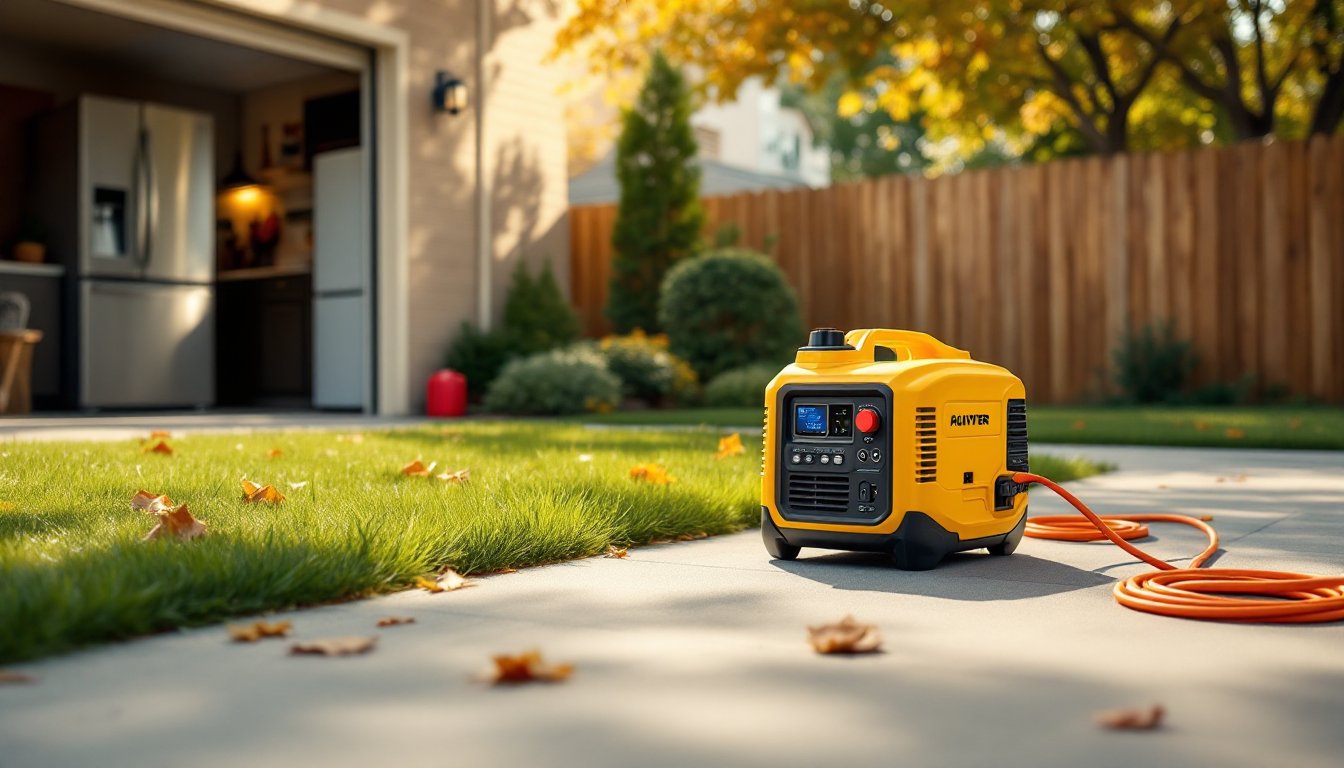
When the power goes out, your refrigerator and freezer are on borrowed time. Without electricity, a fully stocked freezer can start losing its chill within 24 to 48 hours, and a refrigerator begins warming up in just four hours. A generator can keep your food safe and save you hundreds of dollars in spoilage, but only if you choose the right size. Too small, and the compressor won’t start. Too large, and you’re wasting money on capacity you’ll never use. This guide walks through exactly what size generator to run a refrigerator and freezer, covering wattage requirements, sizing calculations, and safe operation, no guesswork required.
Table of Contents
ToggleKey Takeaways
- A generator’s starting watts, not running watts, are the critical metric when sizing for a refrigerator and freezer, since compressors demand 2–3 times their running wattage in startup surge.
- For a refrigerator and freezer combination, a 4,000-watt portable generator is the typical sweet spot; add a 20–25% buffer to your peak load calculation to avoid overloading the unit.
- A standard refrigerator uses about 700 running watts and 2,100 starting watts, while a chest freezer draws roughly 400 running watts and 1,200 starting watts—always verify exact specifications on the manufacturer’s label.
- Install a manual transfer switch (not backfeed through a wall outlet) to safely connect your refrigerator and freezer to the generator and protect utility workers from electrocution hazards.
- Start appliances one at a time with 10–15 seconds between each to stagger surge loads, and always keep the generator at least 20 feet from windows and doors to prevent deadly carbon monoxide accumulation.
Understanding Generator Wattage Requirements
Generators are rated by two wattage figures: running watts and starting watts (also called surge watts). Running watts represent the continuous output the generator can sustain over time. Starting watts indicate the brief surge of power needed to start motor-driven appliances like refrigerators, freezers, and air compressors.
Most homeowners make the mistake of sizing a generator based only on running watts. That works for resistive loads like light bulbs and space heaters, but refrigerators and freezers have compressor motors that demand a sharp spike of power when they kick on, typically two to three times the running wattage. If your generator can’t deliver that surge, the compressor won’t start, and the appliance won’t cool.
Starting vs. Running Watts Explained
Here’s how the numbers break down. A typical full-size refrigerator draws about 700 watts during normal operation. But when the compressor starts, it can pull 2,100 watts or more for a few seconds. A standalone freezer might run on 500 watts but surge to 1,500 watts on startup.
This surge only lasts a moment, usually one to three seconds, but your generator must handle it without tripping or stalling. That’s why the starting wattage rating is the critical number when sizing for refrigeration equipment. Always check both figures on the generator’s spec sheet, and make sure the starting watts exceed your appliance’s startup load.
How Much Power Do Refrigerators and Freezers Actually Use?
Not all refrigerators and freezers are created equal. Power consumption varies widely based on size, age, efficiency rating, and configuration.
Standard top-freezer refrigerators (14–18 cubic feet) typically use 600–800 running watts and 1,800–2,400 starting watts. Side-by-side and French-door models with ice makers and through-the-door dispensers can push those numbers higher, 800–1,200 running watts and 2,400–3,600 starting watts.
Chest freezers are among the most efficient, drawing 300–500 running watts and 900–1,500 starting watts. Upright freezers use slightly more, 400–600 running watts and 1,200–1,800 starting watts, due to their door seals and less-efficient insulation layout.
Older appliances (pre-2010) often consume 20–30% more power than newer Energy Star models. If your fridge or freezer is more than a decade old, assume the higher end of these ranges. To get exact numbers, check the yellow EnergyGuide label inside the appliance or on the back panel. It lists annual kilowatt-hours (kWh), which you can convert to approximate wattage, though it won’t show starting surge. For surge ratings, consult the manufacturer’s spec sheet or use a Kill A Watt meter (about $25) to measure actual draw during startup.
Calculating Your Total Wattage Needs
To determine what size generator you need to run both a refrigerator and a freezer, add up the starting watts of both appliances, since they could theoretically start at the same time, and then add a 20–25% buffer for efficiency and to avoid running the generator at max capacity continuously.
Here’s a worked example. Let’s say you have:
- A standard refrigerator: 700 running watts, 2,100 starting watts
- A chest freezer: 400 running watts, 1,200 starting watts
Your peak load is 3,300 starting watts (2,100 + 1,200). Add a 25% buffer: 3,300 × 1.25 = 4,125 watts. You’d want a generator rated for at least 4,200 starting watts to handle the load comfortably.
If you’re planning to run additional essentials, a few LED lights, a phone charger, or a sump pump, add those running watts to the total as well. Most LED bulbs use 8–15 watts each, and a ⅓ HP sump pump draws about 800 running watts and 1,300 starting watts.
Don’t forget that the refrigerator and freezer compressors cycle on and off. They’re not both running constantly. But when sizing the generator, you must plan for the worst-case scenario: both units starting simultaneously. Appliance testing confirms that simultaneous startups are rare but possible, especially after a power outage when both have warmed up.
Recommended Generator Sizes for Different Scenarios
Here’s a breakdown of generator sizes based on typical home refrigeration setups:
For a single refrigerator only:
- A 2,000–3,000 watt portable inverter generator is usually sufficient. Models like the Honda EU2200i or Yamaha EF2400iSHC are quiet, fuel-efficient, and can handle most standard fridges with room to spare.
For a refrigerator and a separate upright or chest freezer:
- You’ll want a generator in the 3,500–5,000 watt range. A 4,000-watt portable generator is a common sweet spot, enough to start both units and power a few lights or a small electronics load.
For a large French-door fridge with ice maker, plus a freezer and additional essentials (lights, sump pump, furnace blower):
- Step up to a 5,000–7,000 watt generator. These models provide enough overhead for multiple motor loads and can run for extended outages without straining.
For short-term outages (a few hours to a day), a portable generator makes sense. For homes in storm-prone areas or with frequent grid failures, a standby generator rated at 7,000–10,000 watts is a better long-term investment. Standby units start automatically when power drops and can run indefinitely on natural gas or propane.
If you’re also considering what size generator do i need to run a refrigerator versus a refrigerator and freezer, the difference is typically 1,000–1,500 watts in starting capacity. For a fridge alone, a smaller 2,500-watt model often works fine. Add a freezer, and you’re looking at 4,000 watts minimum.
Choosing Between Portable and Standby Generators
Portable generators are the go-to for occasional outages and budget-conscious homeowners. They’re movable, less expensive (typically $400–$1,500 for a 3,000–5,000 watt unit), and don’t require professional installation. You’ll need to store fuel, manually start the unit, and run extension cords to your appliances. They’re also louder, most operate at 60–70 decibels, about the level of a vacuum cleaner.
Inverter generators, a subset of portables, deliver cleaner power with less voltage fluctuation, making them safer for sensitive electronics. They’re quieter and more fuel-efficient but cost about 30–50% more than conventional portables.
Standby generators are permanently installed outside your home and wired directly into your electrical panel via a transfer switch. When the grid goes down, they kick on automatically within 10–20 seconds. They run on natural gas or propane, so there’s no refueling. Standby units start around $2,500 for the generator alone, and installation by a licensed electrician typically adds $1,500–$3,000. This option makes sense if you experience frequent or extended outages, have medical equipment that requires uninterrupted power, or simply want the convenience of automatic backup.
Both types must comply with the National Electrical Code (NEC), particularly Article 702 on optional standby systems. Local building codes may also require permits and inspections, especially for standby installations involving fuel lines and transfer switches.
Tips for Safely Running Your Refrigerator and Freezer on a Generator
Even with the right-sized generator, improper use can damage your appliances or create hazards. Follow these guidelines:
Use a transfer switch or interlock kit. Never backfeed your home’s electrical panel by plugging a generator into a wall outlet. This creates a deadly risk of electrocution for utility workers and can fry your home’s wiring. A manual transfer switch (around $300–$600 installed) isolates your home from the grid and safely connects essential circuits to the generator.
Start appliances one at a time. Plug in or switch on the refrigerator first, wait 10–15 seconds for the compressor to settle, then start the freezer. This staggers the surge loads and reduces strain on the generator.
Use heavy-duty extension cords rated for outdoor use. If you’re running cords instead of a transfer switch, choose 12-gauge cords for appliances pulling up to 1,500 watts, and 10-gauge cords for higher loads. Undersized cords can overheat, trip breakers, or cause voltage sag that damages compressor motors.
Keep the generator outdoors and away from openings. Generators produce carbon monoxide, an odorless, deadly gas. Place the unit at least 20 feet from windows, doors, and vents. Never run a generator in a garage, basement, or enclosed porch, even with the door open.
Monitor fuel and oil levels. Most portable generators have a low-oil shutoff to prevent engine damage, but you should check oil every 8–10 hours of operation. Keep extra fuel on hand in approved containers, and stabilize gasoline if storing for more than 30 days.
Let food stay closed. During an outage, keep refrigerator and freezer doors shut as much as possible. A fully stocked freezer holds its temperature for about 48 hours if unopened: a half-full one lasts about 24 hours. Kitchen safety experts recommend placing a bag of ice or frozen gel packs in the fridge compartment if the outage extends beyond a few hours.
Wear hearing protection. If you’re operating a conventional portable generator for hours at a time, especially near the house, use foam earplugs or earmuffs. Prolonged exposure to 65+ decibels can cause hearing damage.
By matching your generator’s capacity to your actual starting wattage needs and following safe hookup practices, you’ll keep your refrigerator and freezer running through any outage, without overloading your equipment or risking your safety.