
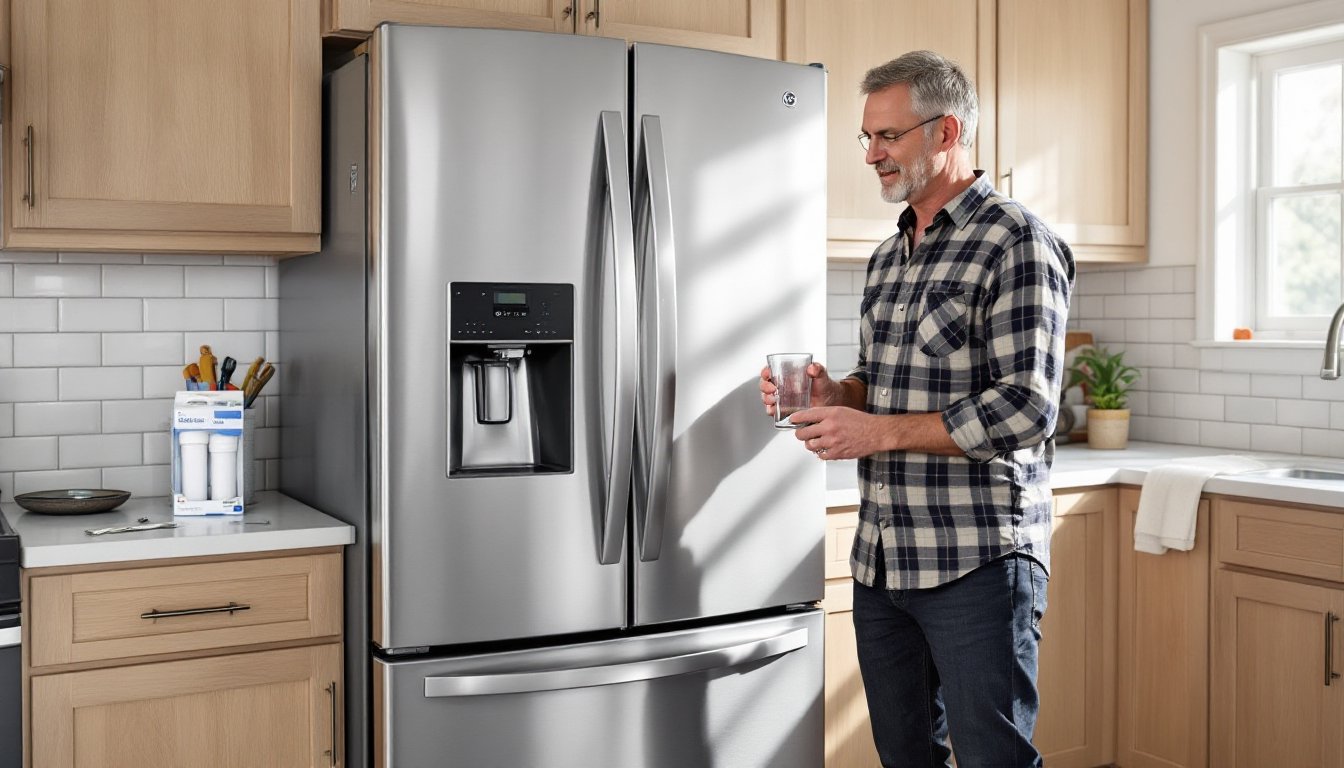
A refrigerator water dispenser that suddenly stops working can turn a quick glass of water into a frustrating hunt for answers. When a GE Profile refrigerator water dispenser quits dispensing, the issue usually isn’t catastrophic, most causes are straightforward and fixable without calling a technician. The problem could be as simple as a shut-off valve in the wrong position or as common as a clogged filter that’s overdue for replacement. Before scheduling a service call, homeowners can troubleshoot the most frequent culprits in under an hour with basic tools and a methodical approach. This guide walks through seven proven fixes for a GE refrigerator not dispensing water, from checking supply lines to testing electrical components.
Table of Contents
ToggleKey Takeaways
- A GE refrigerator water dispenser not working often stems from simple issues like a closed shut-off valve, frozen water line, or clogged filter that homeowners can fix without professional service.
- Check and replace your refrigerator water filter every six months, as a clogged filter is one of the most common reasons for weak or no water flow to the dispenser.
- Frozen water lines frequently occur when the freezer temperature is set below 0°F; adjusting the thermostat and allowing the fridge to thaw for 4–6 hours usually resolves the problem.
- Test your household water pressure with a simple gauge—GE refrigerators need at least 20–30 psi to dispense properly, so low pressure from the main supply or a faulty regulator may be the culprit.
- The water inlet valve controls flow from your supply line and can fail due to mineral deposits or electrical damage; testing it with a multimeter (200–500 ohms indicates a working valve) helps pinpoint the issue.
- Regular maintenance, including six-month filter replacements and annual supply line inspections, prevents most GE refrigerator water dispenser problems from developing.
Check the Water Supply Line and Shut-Off Valve
The simplest explanation is often the right one: no water reaches the dispenser because the supply is cut off. Most refrigerators connect to household plumbing via a ¼-inch braided stainless steel or plastic supply line, controlled by a shut-off valve. If someone recently moved the fridge for cleaning or flooring work, that valve may have been closed and forgotten.
Locate the shut-off valve, typically behind or beneath the refrigerator, near the wall or under the kitchen sink. Turn it fully counterclockwise to ensure it’s open. While back there, inspect the supply line for kinks, pinches, or visible damage. A kinked line restricts flow just as effectively as a closed valve. If the line is cracked or leaking, replace it: a new braided stainless steel line costs $10–$20 and installs with two adjustable wrenches.
Once the valve is confirmed open and the line is clear, press the dispenser paddle. If water still doesn’t flow, the supply is reaching the fridge, time to look deeper. If water trickles weakly, the issue may be low pressure at the source or a restriction further down the line.
Inspect for a Frozen Water Line
A frozen water line inside the refrigerator is one of the most common reasons a GE refrigerator water dispenser stops working, especially if the freezer compartment is set too cold or air circulation is blocked. Ice can form in the narrow tubing that runs from the inlet valve to the dispenser, completely blocking flow.
First, check the freezer temperature. GE recommends 0°F for the freezer: anything colder increases the risk of freezing internal lines. If the thermostat is set lower, adjust it and wait 24 hours. If the line is already frozen, the fridge needs to thaw.
To thaw a frozen line:
- Unplug the refrigerator or turn off the circuit breaker.
- Remove all freezer contents and open the freezer door to allow warm air in.
- Leave the door open for 4–6 hours or until the line thaws. Placing a fan in front of the freezer speeds the process.
- For faster results, use a hair dryer on low heat to warm the back panel near the water line, never use high heat or direct flame, which can melt plastic components or damage wiring.
Once thawed, plug the fridge back in and test the dispenser. If it freezes again within a few days, the freezer temperature may still be too low, or there’s an airflow problem caused by overpacking the freezer or a faulty damper control.
Replace a Clogged Water Filter
GE refrigerators use an internal water filter to remove sediment, chlorine, and contaminants. Over time, these filters clog, restricting water flow to the dispenser and ice maker. GE recommends replacing the filter every six months, but homes with hard water or high sediment may need more frequent changes.
A clogged filter is easy to diagnose: the dispenser either stops working entirely or produces a weak trickle. Many GE models have a filter change indicator light on the control panel that turns red or orange when replacement is due. Ignoring that light invites flow problems.
To replace the filter:
- Locate the filter, most GE models house it in the upper-right corner of the fresh food compartment or in the base grille.
- Twist the old filter counterclockwise and pull it straight out.
- Remove the protective cap from the new filter and insert it into the housing, twisting clockwise until it locks.
- Press and hold the filter reset button (if equipped) for 3 seconds to clear the indicator light.
- Run 2–3 gallons of water through the dispenser to flush carbon fines from the new filter. The first few cups may look cloudy, that’s normal.
Genuine GE filters (MWF, MWFP, or model-specific) cost $40–$60. Third-party filters are cheaper but vary in quality: stick with NSF-certified options if going off-brand. A clogged filter won’t damage the fridge, but it’ll starve the dispenser of water and reduce ice production. Many common dispenser issues trace back to this simple maintenance task.
Test the Water Inlet Valve
The water inlet valve controls the flow of water from the household supply line into the refrigerator. It’s an electrically operated solenoid valve that opens when the dispenser paddle is pressed. If the valve fails, either stuck closed or clogged with mineral deposits, no water reaches the dispenser or ice maker.
The inlet valve is located at the back of the refrigerator, where the supply line connects. Testing it requires a multimeter and basic electrical knowledge. Safety first: unplug the fridge before touching any electrical components.
To test the inlet valve:
- Pull the refrigerator away from the wall and remove the rear access panel (usually held by ¼-inch hex screws).
- Locate the inlet valve, it’s a small plastic or brass component with the supply line attached and two wire terminals.
- Disconnect the wire harness and use a multimeter set to ohms to test resistance across the terminals. A functional valve reads 200–500 ohms. If the meter shows infinite resistance (open circuit) or zero (short), the valve is bad.
- Check for visible sediment or mineral buildup on the valve screens. Even a working valve can clog: remove the supply line and flush the screens with water.
Replacing a faulty inlet valve is straightforward: disconnect the water line and wire harness, remove the mounting screws, install the new valve, and reconnect everything. Replacement valves cost $25–$50 and are model-specific, so check the refrigerator’s model number (found on the interior wall or door jamb) before ordering.
Examine the Dispenser Switch and Control Board
When the dispenser paddle is pressed, it activates a micro switch that signals the control board to open the inlet valve. If the switch is faulty or the control board doesn’t receive the signal, the valve stays closed and no water flows. Electrical failures are less common than mechanical blockages, but they do happen, especially in older models.
Testing the dispenser switch requires removing the dispenser control panel, which varies by model. On most GE refrigerators, the panel is held by Phillips screws hidden behind the drip tray or trim pieces. Unplug the fridge before disassembling anything.
To test the dispenser switch:
- Remove the dispenser panel to access the switch assembly.
- Disconnect the wire harness from the switch.
- Use a multimeter set to continuity mode. Press the dispenser paddle while probing the switch terminals. A working switch shows continuity when pressed and none when released.
- If the switch fails the test, replace it. Switches cost $15–$30 and snap or screw into place.
If the switch tests good, the issue may lie with the main control board. Control board failures are rare but expensive, replacement boards run $150–$300 depending on the model. Diagnosing a bad board usually requires a technician unless the homeowner has experience reading wiring diagrams and testing low-voltage circuits. If multiple dispenser functions fail simultaneously (water, ice, lights), suspect the control board. If only water is affected, revisit the inlet valve and supply line.
Fix Low Water Pressure Issues
GE refrigerators require a minimum of 20–30 psi water pressure to dispense properly. Lower pressure results in slow flow, weak ice production, or no dispensing at all. Homes with well water, older plumbing, or multiple fixtures running simultaneously often experience pressure drops that affect the fridge.
To test household water pressure, attach a pressure gauge (available at hardware stores for $10–$15) to an outdoor hose bib or laundry faucet. Turn on the water and read the gauge. Ideal pressure is 40–60 psi. Below 30 psi, the refrigerator struggles.
If pressure is low:
- Check for partially closed shut-off valves elsewhere in the house: a main valve left half-open reduces pressure throughout.
- Inspect the home’s pressure regulator (usually near the water meter). Regulators fail over time and can be adjusted or replaced by a plumber.
- Clear aerators and screens in faucets and fixtures: sediment buildup restricts flow and lowers pressure.
- For well systems, check the pressure tank and pump settings. A failing pump or waterlogged tank drops pressure significantly.
If household pressure is adequate but the fridge still has low flow, the restriction is internal, revisit the water filter, inlet valve screens, and supply line. Occasionally, the ¼-inch tubing inside the refrigerator develops mineral deposits, especially in areas with hard water. Flushing or replacing internal tubing is advanced work: most homeowners call a technician at that point. For general appliance maintenance tips and kitchen care strategies, regular filter changes and annual supply line inspections prevent most pressure-related issues.
Conclusion
Most GE refrigerator water dispenser failures boil down to a handful of fixable issues: a closed valve, frozen line, clogged filter, or faulty inlet valve. Homeowners comfortable with basic tools and safety precautions can resolve the majority of these problems in an afternoon without professional help. Start with the easiest checks, supply line, filter, and freezer temperature, before moving to electrical testing. If voltage and control board diagnostics feel beyond your skill level, that’s the point to call a qualified appliance technician. Regular maintenance, including six-month filter changes and annual supply line inspections, keeps dispensers flowing smoothly for years.