
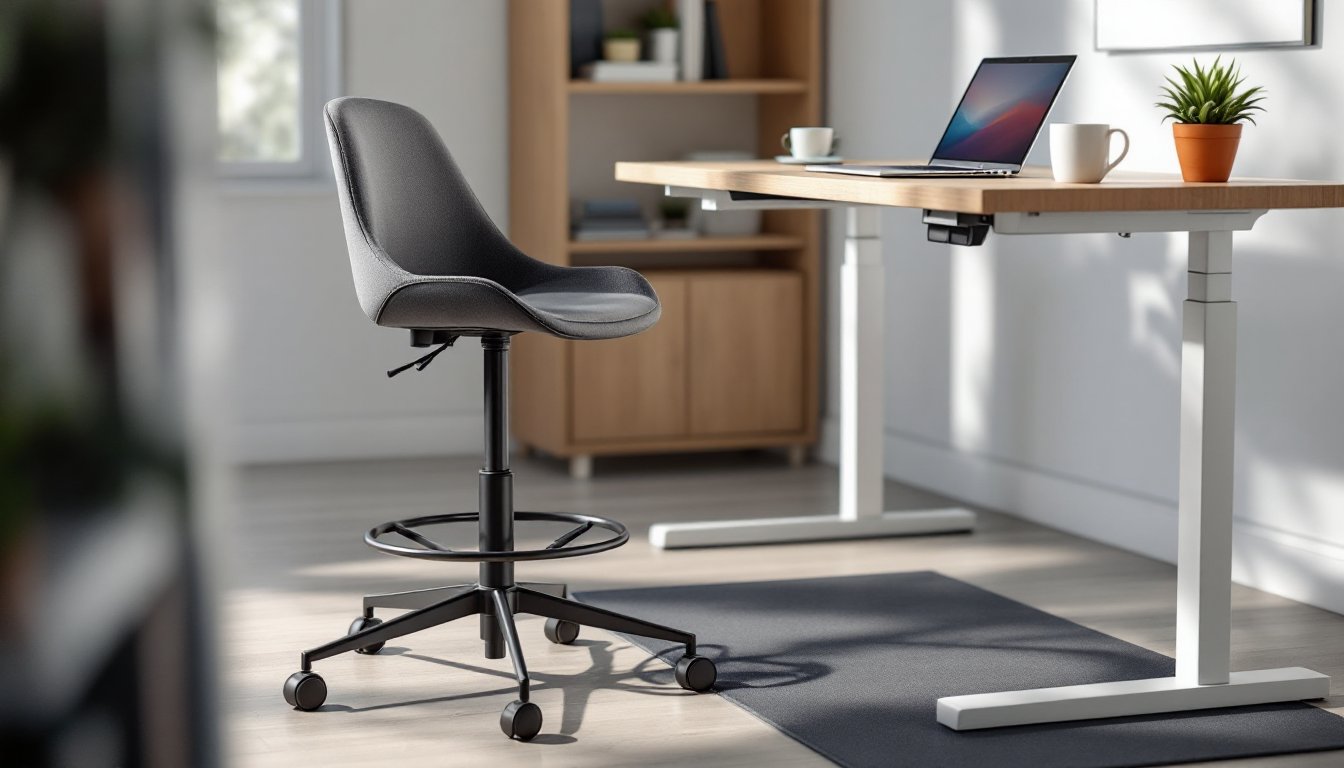
Standing desks revolutionized home offices, but they come with a catch: standing all day is just as rough on the body as sitting. A standing desk stool, also called a perching stool or leaning seat, bridges the gap. It lets you shift weight, rest briefly, and maintain better posture without fully sitting down. For DIYers setting up a productive workspace or upgrading an existing office, this simple addition can prevent fatigue, improve circulation, and keep you moving throughout the workday. Here’s what you need to know to choose, use, and integrate the right stool into your home office.
Table of Contents
ToggleKey Takeaways
- A standing desk stool bridges the gap between sitting and standing by letting you perch with hips higher than knees, reducing fatigue and maintaining better posture without full weight on your feet.
- The best standing desk stool features adjustable height (10+ inches range), a stable base suited to your workspace, and a footrest to reduce strain on your legs and lower back.
- Alternate between standing, perching, and sitting every 20 to 30 minutes to avoid staying in one position too long and maximize circulation and core engagement.
- Proper stool setup requires matching height to your desk (elbows at 90 degrees), choosing the right base for your flooring, and ensuring 30 inches of clearance in front of your desk to move safely.
- A standing desk stool saves floor space, supports transitional work styles, and complements an ergonomic home office when paired with adjustable monitors, proper lighting, and cable management.
What Is a Standing Desk Stool and How Does It Work?
A standing desk stool is a tall, often adjustable seat designed to support a semi-standing position. Unlike a traditional chair, it doesn’t let you sit fully: instead, it allows you to perch or lean, keeping your hips higher than your knees and your core engaged. Most models range from 24 to 36 inches tall when adjusted, matching standard standing desk heights of 38 to 48 inches.
The mechanism is straightforward. A gas lift cylinder, the same tech used in office chairs, adjusts height with a lever. Some models use a fixed post with preset notches or a threaded adjustment collar. The seat itself is typically smaller than a standard chair seat, often 12 to 14 inches in diameter, and may be flat, contoured, or saddle-shaped to encourage better spinal alignment.
The base varies by design. Three-legged stools offer a compact footprint, while five-caster bases provide mobility. Fixed bases with rubber feet maximize stability but sacrifice movement. The key difference from a chair is ergonomics: a standing desk stool keeps your body in a more upright, active position, reducing lower back compression and encouraging subtle weight shifts that promote circulation.
Why You Need a Standing Desk Stool in Your Home Office
Standing desks alone don’t solve ergonomic problems, they just swap one static position for another. A stool adds flexibility. It lets you alternate between standing, perching, and leaning throughout the day, which is the real goal of an active workspace.
Reduced fatigue is the first benefit. Standing for hours strains the lower back, knees, and feet. A stool gives those muscles periodic relief without forcing you into a deep seated position that collapses posture. You can rest your glutes and hamstrings while keeping your spine relatively upright.
Improved circulation comes next. When you perch, your legs remain partially extended, encouraging blood flow better than sitting with bent knees for long stretches. This is especially helpful if you’re recovering from a sedentary lifestyle or dealing with mild swelling in the lower legs.
For DIYers and home office builders, a stool also supports transitional work styles. If you’re sketching plans, reviewing drawings, or working with tools on a raised workbench, an ergonomic stool for standing desk setups keeps you agile. You can pivot, reach, and shift weight without the limitations of a fixed chair.
Finally, a stool takes up less floor space than a full office chair. In compact home offices, mudrooms converted to workspaces, or garage workshops doubling as desks, that footprint matters. A three-leg or single-post stool tucks neatly under the desk when not in use.
Key Features to Look for When Choosing a Standing Desk Stool
Not all stools are built the same. Here’s what separates a solid choice from a wobbly disappointment.
Adjustability and Height Range
Height adjustability is non-negotiable unless you’re building a custom stool to exact specs. Look for a minimum range of 10 inches, ideally 24 to 34 inches or wider. This accommodates users of different heights and desk configurations. Gas lift mechanisms are the smoothest and most common, but they can fail after a few years of heavy use. Pneumatic lifts rated for 250+ pounds hold up better.
If you’re handy, a DIY approach works. Plans for an adjustable height wood and metal stool use threaded rod and basic 2×2 lumber to create a sturdy, customizable seat. You’ll need a drill, wrench set, and about two hours. The adjustability comes from nuts threaded onto all-thread rod, letting you lock the seat at precise heights. It’s not as quick as a lever, but it’s bombproof and doesn’t rely on a gas cylinder that might leak.
Seat angle matters too. Flat seats are versatile, tilted forward seats (5 to 15 degrees) promote a neutral pelvis, and saddle seats spread weight across the thighs. Try before you buy if possible, or at least check return policies.
Base Stability and Mobility
Stability and mobility are a trade-off. Rolling bases with five casters let you glide between desk areas, grab tools, or pivot without standing fully. They work well on hard flooring or low-pile carpet, but they can drift if you’re not careful. Lock at least two wheels or use a model with a foot-activated brake.
Fixed bases with rubber or felt feet anchor the stool in place. They’re better for tasks requiring precision, drafting, soldering, detailed hand tool work, or for use on uneven workshop floors. A tripod base (three legs) is lighter and fits into tight corners, but it’s less stable than a four- or five-leg footprint. If you weigh over 200 pounds or tend to lean hard, go with more contact points.
Footrests built into the base or post are a nice addition. They give your feet somewhere to go when perching and reduce strain on calves. Adjustable footrests (or footrest rings that slide up and down the post) are ideal, since everyone’s leg length differs. If the stool lacks one, a simple 2×4 scrap cut to 12 inches and placed underfoot works in a pinch.
How to Use a Standing Desk Stool for Maximum Comfort and Health Benefits
Owning a stool is one thing: using it correctly is another. Here’s how to get the most out of it without creating new problems.
Set the height so your hips are slightly higher than your knees when perched. This keeps your pelvis tilted forward and your lumbar spine in a neutral curve. If your knees are higher than your hips, you’re sitting too low and negating the ergonomic benefit. If your hips are way above your knees, you’re standing with a prop, still useful, but you’re not truly perching.
Alternate positions every 20 to 30 minutes. Stand fully, perch on the stool, walk a few steps, then stand again. The goal isn’t to eliminate standing or sitting entirely, it’s to avoid staying in one position too long. Set a timer if you tend to lose track.
Engage your core lightly even when perched. A stool supports weight but shouldn’t let you collapse. Think of it as active resting. Your abs and lower back should stay awake, not checked out. This is easier on a stool without a backrest, which naturally encourages better posture.
Adjust your desk height in tandem with the stool. Your elbows should form a 90-degree angle when your hands rest on the keyboard, whether you’re standing or perched. Most standing desks have a range of 25 to 50 inches: use the full span. If your desk isn’t adjustable, you may need to raise your monitor on a riser or lower your keyboard tray.
Wear supportive footwear or use an anti-fatigue mat. Even with a stool, you’ll spend time standing. A cushioned mat (¾-inch thick, dense foam or gel) reduces joint impact. If you work barefoot or in socks, a mat is essential. Skip the flimsy yoga mats, they compress too quickly and offer little support.
For woodworkers and DIYers splitting time between a desk and a workbench, resources like Fix This Build That offer project plans and tool reviews that can help you outfit a versatile workspace. Pairing a standing desk stool with a well-organized shop makes transitioning between tasks smoother.
Integrating a Standing Desk Stool Into Your Home Office Design
A stool isn’t just a piece of furniture, it’s part of a system. Here’s how to build it into your workspace without it feeling like an afterthought.
Plan for clearance. Measure the footprint of your stool base (typically 20 to 24 inches in diameter for rolling bases, 16 to 18 inches for tripods) and ensure you have at least 30 inches of clearance in front of the desk. You need room to step in, shift weight, and move the stool aside when standing fully. Tight quarters lead to tripping hazards and unused stools.
Coordinate with desk depth and layout. Standard desks are 24 to 30 inches deep. If yours is shallower than 24 inches, a stool can feel cramped, your knees might hit the underside of the desktop when perched. Consider a wall-mounted or floating desk with adjustable depth if space is tight, or use a corner L-shaped desk to give the stool room to tuck into the return.
Match materials and finish to the rest of your office. Wood seats and metal frames fit industrial or farmhouse aesthetics. Molded plastic or padded vinyl suits modern minimalist setups. If you’re building your own, stain or paint the stool to match existing furniture. A mismatched stool stands out, and not in a good way.
Cable management matters. Rolling stools and desk cables don’t mix well. Use cable clips, raceways, or a cable tray under the desk to keep cords off the floor. A stool wheel snagging a power strip mid-perch is a quick way to ruin your workday, or damage equipment.
Add a footrest or foot bar if the stool doesn’t include one. A 1-inch diameter dowel rod or ¾-inch black pipe mounted 8 to 12 inches off the floor between desk legs works perfectly. Secure it with flanges or U-brackets screwed into the desk frame or wall studs (find studs with a stud finder: drywall anchors won’t hold repeated foot pressure). This gives you a stable place to rest your feet and shifts weight off your lower back.
For those new to DIY furniture projects or workspace upgrades, sites like The Handyman’s Daughter provide beginner-friendly tutorials and plans that make custom solutions accessible. Even a basic footrest or stool modification becomes manageable with clear instructions and a weekend afternoon.
Lighting and monitor placement should adjust with your stool use. If you perch lower than you stand, your sightline changes. Mount monitors on an adjustable arm so you can tilt and raise the screen as you shift positions. Desk lamps should illuminate the work surface from above or the side, not create glare on the screen. A swing-arm lamp with a clamp base gives flexibility without taking up desk real estate.
Finally, test the full workflow before committing to a layout. Spend a full workday using the stool, standing, and moving between positions. Note where you feel cramped, where the stool gets in the way, and where it helps. Adjust desk height, stool placement, and accessories accordingly. Small tweaks, moving the stool 6 inches left, angling the desk slightly, raising the monitor an inch, make a big difference in daily comfort.