
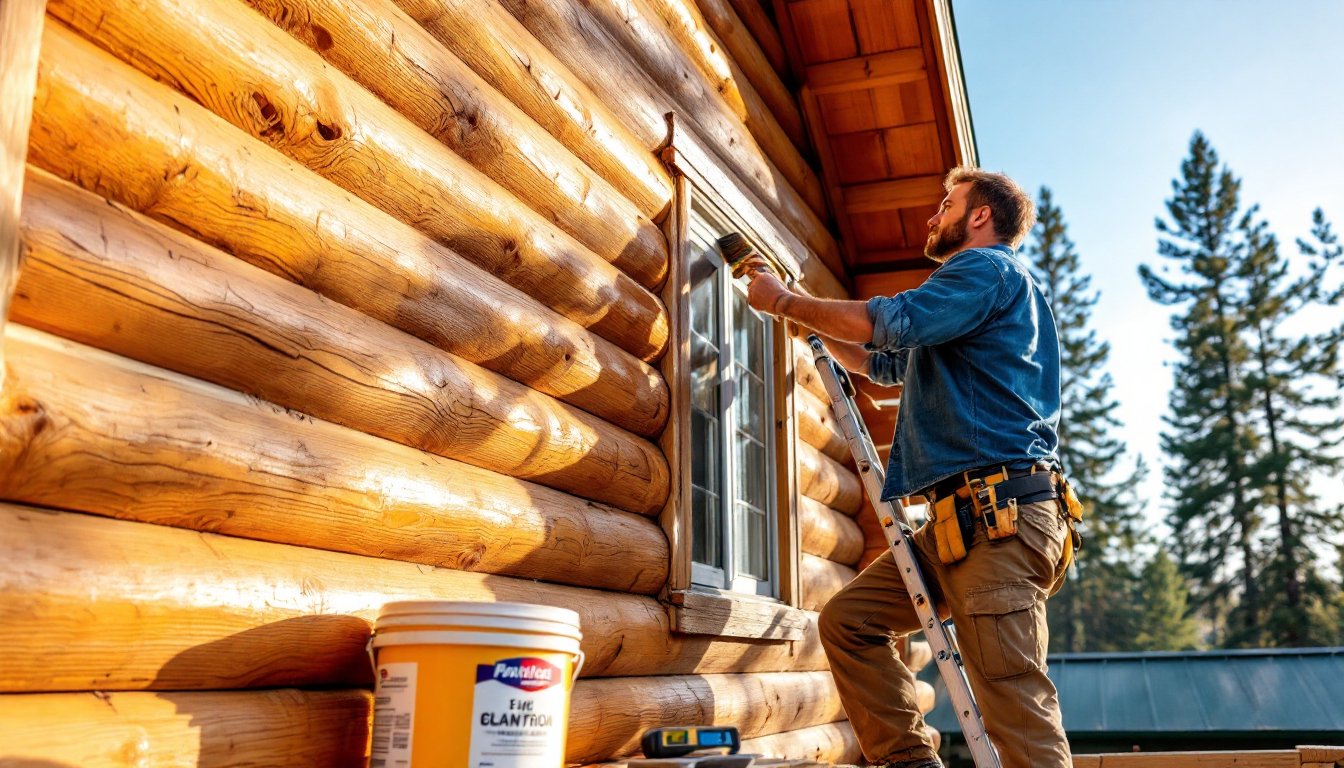
Log homes deliver rustic charm and solid construction, but they demand more active maintenance than conventional stick-framed houses. Wood breathes, shifts, and weathers, meaning owners face a unique set of ongoing costs that can catch the unprepared off-guard. Unlike vinyl siding or brick exteriors that mostly take care of themselves, logs need regular staining, sealing, chinking repairs, and pest monitoring to stay structurally sound and weather-tight. This guide breaks down the real numbers homeowners should expect to spend annually and over the long haul, along with strategies to keep those expenses manageable without sacrificing the integrity of the home.
Table of Contents
ToggleKey Takeaways
- Log home maintenance costs typically range from $2,000–$5,000 annually, with restaining being the single largest recurring expense at $8,000–$20,000 every 4–6 years.
- Moisture management, UV protection, chinking repairs, and pest monitoring are the four essential maintenance priorities to prevent structural damage and extend your log home’s lifespan.
- Spot repairs caught early through annual inspections prevent expensive emergencies, as deferred log home maintenance costs can escalate into five-figure repairs within a few years.
- Strategic choices like high-quality UV-blocking stains, extended roof overhangs, and premium chinking can reduce long-term log home maintenance expenses by extending finish life and preventing premature failures.
- DIY tasks like inspections, cleaning, and minor caulking repairs are budget-friendly, while professional services should handle full restaining, structural repairs, and media blasting to protect your investment.
Understanding the Unique Maintenance Needs of Log Homes
Log homes are built from organic material that reacts to moisture, UV exposure, temperature swings, and insect activity. Unlike traditional framing hidden behind drywall, the structural timbers are also the exterior cladding and interior finish, so every maintenance task serves triple duty.
Moisture management sits at the top of the priority list. Logs can absorb water through checks (natural cracks that form as wood dries), end grain, and worn finishes. Unchecked moisture leads to rot, mold, and insect infestation. A quality water-repellent stain or sealant acts as the first line of defense, but it degrades under sun and weather and needs reapplication every 3–7 years depending on climate and product quality.
UV degradation breaks down lignin in the wood, turning logs gray and making them more porous. While the weathered look appeals to some, it accelerates moisture penetration. UV-blocking stains slow this process but don’t eliminate it.
Chinking and caulking seal the gaps between logs and around windows, doors, and penetrations. As logs settle and shift, especially in the first few years after construction, these flexible sealants crack or pull away. Annual inspections and spot repairs prevent drafts, water intrusion, and energy loss.
Insect and pest control matters more in log construction than in conventional homes. Carpenter bees, powder post beetles, and termites can bore into untreated or compromised wood. Regular home maintenance checklists should include visual checks for sawdust piles, exit holes, and soft spots.
Ignoring these tasks doesn’t just hurt curb appeal, it risks structural damage that can cost tens of thousands to remediate.
Annual Log Home Maintenance Costs Breakdown
Budgeting for a log home means setting aside funds every year, not just when something breaks. A well-maintained log home typically costs $2,000–$5,000 per year in routine upkeep, though this varies widely based on home size, climate, and finish type.
Basic annual tasks include:
- Inspection and cleaning: $200–$500 if DIY, or $500–$1,200 for professional pressure washing and inspection. Removing dirt, pollen, and mildew before they degrade the finish extends stain life.
- Spot repairs to chinking/caulking: $300–$800 depending on linear footage. Small gaps caught early prevent bigger problems.
- Pest monitoring and treatment: $150–$400 for annual inspections and preventive borate treatments in vulnerable areas.
- Gutter cleaning and roof maintenance: $200–$400. Clogged gutters dump water directly onto logs, accelerating rot.
These figures assume a 2,000–2,500 sq ft log home in average condition. Larger homes, those in harsh climates (heavy sun, freeze-thaw cycles, high humidity), or homes with neglected finishes will land on the higher end or beyond.
Staining and Sealing Expenses
Restaining is the single largest recurring expense. Professional application runs $3–$7 per square foot of log surface, translating to $8,000–$20,000 for a typical home every 4–6 years. DIY drops material costs to $1–$2 per square foot (around $2,500–$5,000 in stain alone for 2,500 sq ft), but demands serious labor, expect 40–80 hours of prep, application, and cleanup.
Stain choice affects both cost and longevity. Oil-based penetrating stains cost $40–$80 per gallon (covering roughly 150–200 sq ft per coat) and require reapplication every 3–5 years. Film-forming latex stains run $50–$100 per gallon, last 5–7 years, but can peel if moisture gets underneath, requiring more intensive prep on future coats.
Surface prep accounts for much of the labor. Logs must be cleaned, sanded lightly to open the grain, and allowed to dry fully. Skipping this step causes poor adhesion and premature failure. Budget an extra $1–$2 per square foot for professional prep if the wood is grayed or previously coated.
Sealing end grain and checks with a specialized elastomeric sealant adds another $200–$600 per application, but it’s critical, end grain wicks water like a straw.
Chinking and Caulking Repairs
Chinking fills the horizontal gaps between logs, while caulking seals joints around windows, doors, and corners. Both materials flex with wood movement but eventually crack, shrink, or pull loose.
Professional chinking repair costs $8–$15 per linear foot, depending on gap width and accessibility. A 2,000 sq ft log home might have 400–600 linear feet of chinking, so full replacement runs $3,200–$9,000. Spot repairs, catching failures early during annual walkthroughs, typically cost $500–$1,500 and prevent the need for wholesale replacement.
DIY chinking is feasible but messy. Quality acrylic chinking costs $15–$30 per tube (covering roughly 10–15 linear feet at 1-inch bead), plus you’ll need a bulk caulk gun, backer rod, and steady hands. According to cost guides on Angi, homeowners who tackle chinking themselves can cut expenses by 60–70%, but the learning curve is steep.
Caulking around trim and penetrations costs less, $3–$6 per linear foot professionally, or $5–$10 per tube for DIY. Budget $300–$700 annually for touch-ups.
Major Log Home Maintenance Projects and Their Costs
Beyond annual upkeep, log homeowners face larger projects every decade or two. These aren’t optional, they’re essential to preserving the structure.
Full exterior media blasting and refinishing becomes necessary when stain has failed across large areas or logs have grayed significantly. This involves stripping old finish with corn cob media or chemical strippers, sanding, treating with brightener and borate preservatives, then restaining. Professional jobs run $15,000–$40,000 depending on home size and condition. Doing it yourself cuts costs to $4,000–$8,000 in materials and equipment rental, but it’s a multi-week project requiring scaffolding, a media blaster (rent for $200–$400/day), and serious elbow grease.
Log replacement for rot or insect damage costs $1,500–$5,000 per log, including labor to cut out the damaged section, scribe and fit a new timber, and refinish the repair. Structural logs supporting loads require engineered solutions and may need permits, hire a licensed contractor experienced in log work.
Roof replacement or re-roofing follows standard timelines (15–30 years depending on material) but carries added complexity. Log homes often feature steep pitches, dormers, and exposed rafter tails that demand careful flashing. Asphalt shingles run $8,000–$15,000, metal roofing $15,000–$30,000. Proper eave detailing is critical, water running off the roof shouldn’t splash directly onto logs.
Foundation and settling issues can emerge as logs compress and settle, especially in the first 3–5 years. Adjusting support posts, shimming windows and doors, and re-leveling beams costs $2,000–$8,000 depending on severity. This work sometimes requires a structural engineer’s assessment ($500–$1,500).
Research from HomeAdvisor shows that deferred maintenance on log homes compounds quickly, small repairs ignored for a few years can escalate into five-figure emergencies.
DIY vs. Professional Maintenance: Cost Comparison
Log home maintenance lends itself to DIY work more than structural remodeling, but not every task suits a handy homeowner. Understanding where to draw the line saves money without risking the home’s integrity.
DIY-friendly tasks include:
- Annual inspections and cleaning: Pressure washers rent for $40–$80/day. Use a fan tip and keep pressure under 1,200 PSI to avoid damaging wood fibers.
- Spot chinking and caulking repairs: A caulk gun, backer rod, and a few tubes of chinking cost under $100. Watch manufacturer videos for application technique.
- Applying log oil or maintenance coats: If the existing finish is in good shape, a maintenance coat every 2–3 years extends life. One person can cover 500 sq ft in a day using a pump sprayer and brush for cut-ins.
When to hire pros:
- Full restaining projects: Scaffolding rental, surface prep, and the sheer scale make this a job for experienced crews unless the homeowner has weeks to dedicate and no fear of heights.
- Structural repairs or log replacement: This requires specialized tools (chainsaw, scribers, log dogs) and knowledge of load paths. Mistakes compromise safety.
- Borate treatments and pest control: Licensed applicators have access to stronger products and know where to target treatments.
- Media blasting: Rental equipment is expensive and technique matters, too aggressive and you’ll damage the wood, too light and old finish remains.
A hybrid approach delivers the best value. Homeowners can handle inspections, cleaning, and minor touch-ups, budgeting $500–$1,000 annually in materials and rentals. Hire professionals for staining every 5 years ($10,000–$15,000) and major repairs as needed. This keeps total annual costs in the $2,500–$4,000 range, manageable for most budgets.
For those following a broader home maintenance checklist, log-specific tasks should be added to seasonal routines alongside standard items like HVAC filter changes and gutter cleaning.
How to Reduce Log Home Maintenance Expenses
Smart planning and proactive care cut long-term costs without compromising the home’s condition. Here’s how to stretch the maintenance budget:
Choose the right finish from the start. High-quality stains with UV blockers and water repellents cost more upfront ($60–$100/gallon vs. $30–$50) but last 1–3 years longer, reducing labor frequency. Semi-transparent stains show wood grain beautifully but require more frequent recoating than solid stains, which hide more and last longer.
Extend roof overhangs. Eaves that project 3–4 feet shield walls from rain and sun, dramatically reducing stain degradation. If building new or adding on, this is a high-ROI detail. Retrofitting overhangs costs $15–$30 per linear foot but pays back in extended finish life.
Invest in quality chinking. Cheap acrylic chinking fails in 5–7 years: premium products last 15–20. Spending an extra $2,000–$3,000 on chinking during construction or re-chinking eliminates a decade of spot repairs.
Maintain landscaping setbacks. Shrubs and sprinklers that contact logs promote rot and insect damage. Keep plantings 2–3 feet away and ensure irrigation doesn’t spray walls. This costs nothing but vigilance.
Catch problems early. An annual walkthrough with a checklist, looking for new checks, stain failure, soft spots, or insect activity, turns $200 repairs into preventable crises. Many homeowners integrate this into spring home maintenance routines when weather allows careful exterior inspection.
Buy materials in bulk during sales. Stain and chinking don’t spoil if stored properly. Buying 10–15 gallons when the supplier runs a promotion saves 10–20%.
Learn basic skills. A weekend workshop or online tutorial on chinking application, stain touch-ups, and wood inspection pays dividends for years. Community colleges and log home associations often offer classes for $50–$150.
Consider a maintenance contract. Some log home restoration companies offer annual service plans ($1,500–$3,000/year) that include inspection, cleaning, and minor repairs. For owners who travel frequently or lack the time, this prevents neglect and catches issues early. Cost comparisons on ImproveNet suggest contracts often cost less than emergency repairs from deferred maintenance.
Monitor moisture with a pin-type meter ($30–$80 at hardware stores). Check logs in spring and fall, especially near ground level, roof edges, and around windows. Wood moisture above 20% signals a problem before visible damage appears.
Log homes aren’t low-maintenance, but they’re not financial sinkholes either. Owners who budget $3,000–$5,000 annually and stay ahead of small issues enjoy decades of solid, beautiful living space. Those who defer work face unpredictable expenses that can hit five figures when structural integrity is compromised. The key is treating maintenance as an ongoing investment, not an optional expense, much like the approach outlined in home maintenance tips for any property type, but with the added focus wood construction demands.