
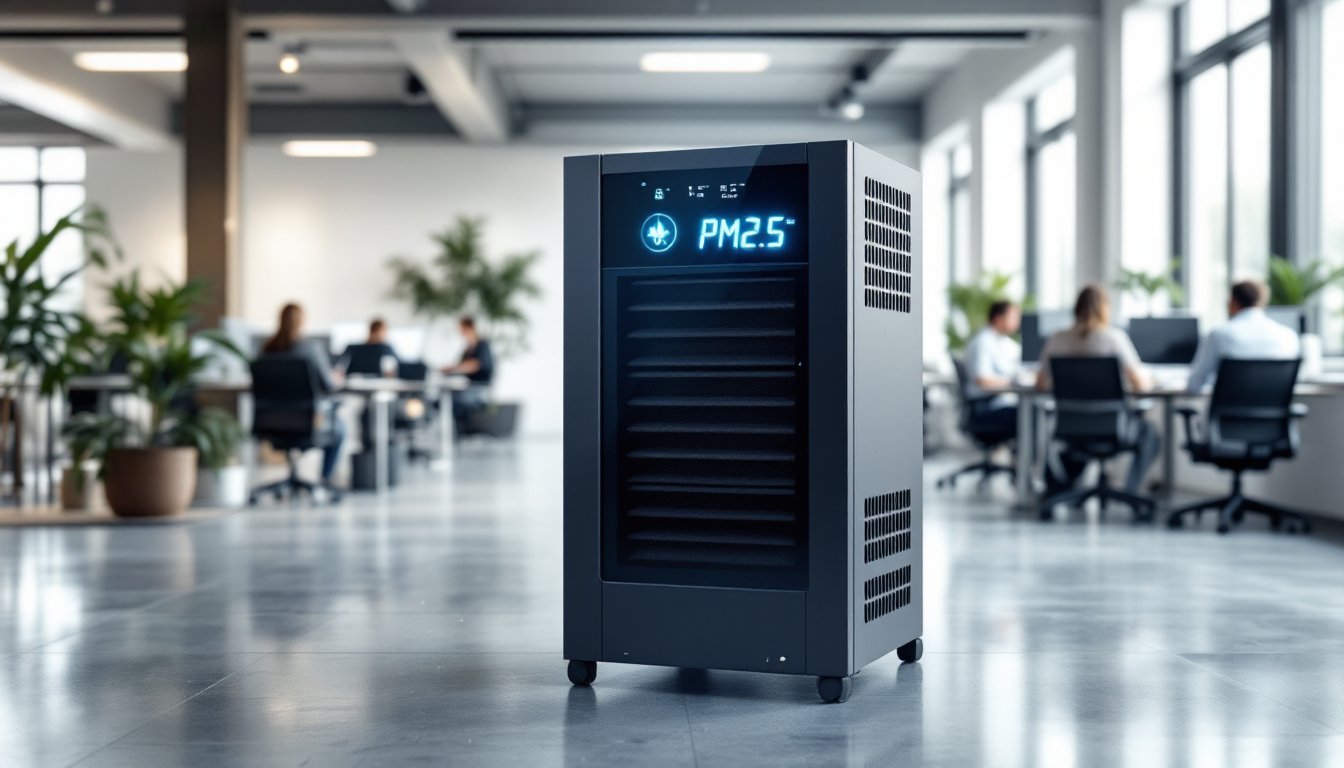
Commercial air purifiers aren’t just scaled-up household units. They’re built to handle the particulate load, humidity swings, and runtime demands of workshops, retail spaces, offices, and high-traffic zones where filtration failure isn’t an option. Whether you’re running a wood shop generating fine sawdust, managing a warehouse with diesel exhaust concerns, or maintaining an office where air quality directly impacts productivity, the right commercial unit delivers consistent filtration without constant maintenance or performance drop-off. This guide cuts through the marketing fluff and focuses on what separates genuine commercial-grade purifiers from oversized residential models, and which units deliver the best performance for specific environments.
Table of Contents
ToggleKey Takeaways
- A best commercial air purifier differs from residential models through industrial-grade motors (24/7 operation), larger HEPA filter surface area (50–100 square feet), and gasket-sealed chambers that prevent air bypass—critical for consistent performance in high-traffic spaces.
- Calculate required CFM by multiplying room volume in cubic feet by your target air changes per hour (4–6 for general use, 8–10 for chemical environments), then dividing by 60 to right-size the purifier for actual performance, not manufacturer claims.
- True HEPA certification (H13 or H14 standard capturing 99.97% of 0.3-micron particles) is essential, especially when combined with substantial activated carbon filters (10+ pounds) for environments handling VOCs from paint, solvents, or chemical cleaners.
- Workshop and metalworking applications demand high CFM units (700–1,000+) with spark arrestors and grounded housings for dust collection, complemented by multi-stage filtration that separates the bulk load before the main HEPA stage.
- Budget $200–$500 annually for filter maintenance (HEPA replacement every 12–18 months, carbon every 6–12 months), and prioritize variable speed controls with PM2.5 or VOC sensors to balance noise levels (under 55 dB in customer-facing areas) against filtration intensity.
- Match filtration stages to your primary contaminant: HEPA for particulate, activated carbon for chemical vapors, and multi-stage systems for mixed environments like restoration workshops dealing with mold, dust, and chemical exposure simultaneously.
What Makes a Commercial Air Purifier Different from Residential Models?
The core difference comes down to capacity, construction, and duty cycle. Residential purifiers handle typical home pollutants, dust, pet dander, seasonal pollen, in spaces under 500 square feet with moderate runtime expectations. Commercial units are engineered for continuous operation in spaces ranging from 1,000 to 5,000+ square feet, with filtration systems designed to process higher volumes of contaminated air without filter clogging or motor burnout.
Motor durability is critical. Commercial units use industrial-grade blowers rated for 24/7 operation, often with ball-bearing assemblies rather than sleeve bearings common in residential models. Expect to see Clean Air Delivery Rate (CADR) ratings above 400 CFM (cubic feet per minute), with top-tier models exceeding 1,000 CFM. For context, most residential purifiers max out around 250–350 CFM.
Filter surface area scales dramatically. A commercial-grade HEPA filter might have 50–100 square feet of pleated media compared to 15–25 square feet in a residential unit. Larger surface area means longer filter life and sustained airflow even as particulate accumulates. Many commercial units also feature prefilters (MERV 8–11 rated) that capture larger debris before it reaches the HEPA stage, extending the primary filter’s service interval from 6 months to 12–18 months in moderate-use environments.
Housing construction typically uses 16- to 18-gauge steel rather than ABS plastic, with powder-coated finishes that resist chemical exposure and physical abuse. Gasket-sealed filter chambers prevent bypass leakage, a common failure point in cheaper units where unfiltered air sneaks around the filter frame. If the unit will be handling VOCs (volatile organic compounds) from paint, solvents, or adhesives, look for models with activated carbon filters weighing 10+ pounds: residential units often include token carbon layers under 2 pounds that saturate quickly.
Top Features to Look for in a Commercial Air Purifier
Start with HEPA certification, not “HEPA-type” or “HEPA-like.” True HEPA filters meet the H13 or H14 standard (per EN 1822), capturing 99.97% of particles at 0.3 microns. For welding fume, machining dust, or mold remediation, H14 is worth the premium. Check the filter’s actual vs. tested dimensions: some manufacturers list the filter frame size rather than the effective media area.
Air changes per hour (ACH) determines filtration effectiveness. Commercial spaces should target 4–6 ACH minimum, meaning the entire room’s air volume passes through the purifier 4–6 times hourly. Calculate this by multiplying CADR (in CFM) × 60, then dividing by room volume in cubic feet. A 500 CFM unit in a 20′ × 30′ × 10′ space (6,000 cubic feet) delivers 5 ACH, adequate for general particulate control but marginal for chemical fume environments.
Variable speed controls with at least three manual settings (plus auto mode) let you balance noise against filtration intensity. Look for units with PM2.5 sensors and VOC sensors that adjust fan speed in real time. Optical particle counters are more reliable than resistive sensors: they provide actual particulate counts rather than estimations based on airflow resistance.
Decibel ratings matter in occupied spaces. Most commercial units run 50–65 dB at maximum speed, about the level of normal conversation to an operating dishwasher. If the purifier will run in a customer-facing area, prioritize models under 55 dB at medium speed. Workshop environments tolerate 70+ dB without issue.
Safety certifications include UL 867 (electrostatic air cleaners) or UL 507 (fans/blowers), and CARB compliance if operating in California. Units handling flammable particulate (wood dust, metal grinding dust) should have grounded, spark-resistant housings. For healthcare or lab environments, some jurisdictions require NSF/ANSI 49 certification for biosafety.
Our Top Picks: Best Commercial Air Purifiers for Different Needs
Best for Large Spaces and High Traffic Areas
The Airpura T600 handles spaces up to 2,000 square feet with a 635 CFM motor and a 3-inch-deep HEPA filter containing 100 square feet of media. It’s built around a 26-pound activated carbon filter, making it effective for environments with chemical off-gassing, think newly renovated offices with fresh paint and carpet adhesives. The all-metal housing withstands the kind of abuse common in commercial settings. Filter changes are tool-free, with a hinged access panel rather than screws or clips.
For larger areas, the IQAir GC MultiGas scales to 3,000+ square feet and includes four separate filter stages: a prefilter, two gas-phase filters with different carbon blends (one for formaldehyde/VOCs, one for odor compounds), and a HyperHEPA final stage rated to 0.003 microns. It’s overkill for basic dust control but justifies its cost in environments with serious air quality challenges, restoration work after fire or flood, industrial fabrication shops, or spaces adjacent to high-traffic loading docks. Independent testing has shown these units maintaining rated performance in challenging conditions.
Blueair Classic 605 offers a middle ground with 775 CFM capacity and a combined electrostatic/mechanical filtration system that captures particles while maintaining lower pressure drop across the filter. That translates to quieter operation (49 dB on medium) and lower energy consumption, around 20–60 watts depending on speed, versus 120+ watts for comparable units. It’s a solid choice for retail spaces or offices where aesthetics and noise are priorities alongside performance.
Best for Workshop and Garage Environments
Workshops demand different priorities: durability, high CFM, and the ability to handle heavy particulate loads from sawdust, grinding dust, or welding fume. The Jet AFS-1000B is purpose-built for this, with a 1,000 CFM rating and a remote control so you can mount the unit overhead (it includes ceiling brackets). The two-stage filtration uses a washable electrostatic prefilter followed by a HEPA cartridge. The prefilter captures the bulk of wood chips and coarse dust, and you can hose it down monthly rather than replacing it.
For metalworking or welding, the BOFA AD Oracle provides fume extraction with a 700 CFM motor, a HEPA-grade main filter, and a deep-bed carbon stage rated for metal oxide particulate and soldering flux vapors. It includes a spark arrestor in the inlet, critical when dealing with hot grinding sparks that can ignite accumulated dust inside a standard purifier. The unit’s steel housing is grounded to prevent static buildup. Independent reviews from experts testing air purifiers in workshop conditions highlight its effectiveness in handling fine metal dust.
If you’re working with epoxy, polyurethane, or other high-VOC materials, add supplemental carbon filtration. A standard shop air purifier won’t address chemical vapors, activated carbon is non-negotiable for those applications. Many DIYers in garages and home shops find that maintaining proper indoor air quality requires both particulate and gas-phase filtration, especially in confined spaces without dedicated ventilation systems.
Safety note: None of these units replace proper dust collection at the tool. Table saws, routers, and planers should connect to a dedicated dust collector or shop vac. Air purifiers are supplemental filtration for ambient dust that escapes collection, not primary control.
How to Choose the Right Commercial Air Purifier for Your Space
Start by calculating room volume in cubic feet (length × width × ceiling height). Multiply by your target ACH (4–6 for general use, 8–10 for chemical-heavy environments), then divide by 60 to get required CFM. Don’t rely on the manufacturer’s “room size” claims, those often assume 8-foot ceilings and minimal air quality challenges. A 2,000-square-foot warehouse with 20-foot ceilings needs 8–10× the CFM of a 2,000-square-foot office suite.
Identify your primary contaminant. Particulate (dust, pollen, mold spores) requires HEPA filtration. Chemical vapors (paint fumes, solvent off-gassing, diesel exhaust) require activated carbon, with filter weight proportional to exposure level. Biological contaminants (bacteria, viruses) may justify UV-C or ionization stages, though HEPA alone captures most pathogens. Mixed environments, like a restoration workshop dealing with mold, dust, and chemical cleaners, need multi-stage systems with both HEPA and substantial carbon capacity.
Consider placement and airflow patterns. Commercial purifiers work best in central locations with unobstructed intake and exhaust. Avoid corners or tight alcoves where recirculation stagnates. If the space has forced-air HVAC, coordinate purifier placement to work with existing air currents rather than against them. Units placed near doors or loading docks intercept incoming contaminated air before it disperses.
Budget for maintenance. HEPA filters for commercial units range from $80–$300 depending on size and brand. Carbon filters run $100–$400. At 4–6 ACH in a moderately dusty environment, expect HEPA replacement every 12–18 months and carbon every 6–12 months (carbon saturates faster than HEPA clogs). Prefilters should be checked monthly and replaced or washed quarterly. Factor $200–$500 annual maintenance per unit into your operating budget. Some units include filter life indicators based on runtime and pressure differential: others require manual tracking.
Noise tolerance varies by application. A 65 dB unit is fine in an unoccupied warehouse but disruptive in a showroom. If noise is a concern, oversize the unit and run it at medium speed rather than buying a smaller unit that needs to run flat-out. Certified testing data from sources like Good Housekeeping’s lab evaluations provides reliable decibel ratings across different speed settings.
Electrical requirements: Most commercial units run on 120V/15A circuits, but high-capacity models (1,000+ CFM) may require 240V. Verify your shop or facility can support the load. Continuous-duty units can draw 100–200 watts at full speed: running 10 hours daily adds $10–$20 monthly to your electric bill at typical commercial rates.
Conclusion
Choosing a commercial air purifier isn’t about finding the “best” unit, it’s about matching capacity, filtration stages, and durability to your specific environment and contaminant profile. Calculate your CFM needs, identify whether you’re dealing with particulate, chemical vapors, or both, and budget for ongoing filter replacement. A properly sized and maintained commercial purifier delivers measurable air quality improvement, whether you’re protecting employees in a workshop, customers in a retail space, or your own lungs in a home shop.