Abstract wall decor has become one of the fastest ways to change the mood of a room without demolishing anything. Unlike traditional art that depicts recognizable subjects, abstract pieces use color, shape, and texture to create visual interest, and they’re forgiving. There’s no “wrong” way to interpret them, which makes them ideal for homeowners who want impact without commitment to a specific theme. Whether working with a blank wall in a new build or refreshing a dated living room, abstract art offers flexibility that landscapes and portraits simply can’t match. This guide covers what makes abstract decor effective, the most practical types for DIY installation, and how to hang them without trial-and-error guesswork.
Table of Contents
ToggleKey Takeaways
- Abstract wall decor transforms any room’s mood without renovation by using color, shape, and texture to create visual interest with no single correct interpretation, making it ideal for flexible home design.
- The best abstract wall decor sizing rule spans two-thirds to three-quarters of the furniture width below it, with the piece centered at 57-60 inches from the floor for optimal eye-level viewing.
- Canvas prints, metal sculptures, and wood pieces each offer distinct advantages: canvas is affordable and easy to install, metal is durable and low-maintenance, and wood adds natural warmth but requires humidity management.
- DIY abstract wall art projects like acrylic pouring, geometric wood panels, and textured fabric hangings are accessible to beginners and cost under $30-50, transforming blank walls in a weekend.
- Proper hanging requires the right hardware (picture hangers for lightweight pieces, toggle bolts for drywall, studs for heavy sculptures) and precise height calculations to avoid the common mistake of hanging art too high.
- Gallery wall arrangements and directional lighting at 30-degree angles enhance depth and showcase abstract wall decor’s dynamic qualities while protecting against fading from direct sunlight.
What Is Abstract Wall Decor and Why It Works in Any Room
Abstract wall decor refers to art that doesn’t attempt to represent external reality. Instead, it relies on form, color, line, and texture. Think geometric shapes, paint splatters, metal cutouts, or layered wood assemblies. The appeal is simple: abstract pieces adapt to nearly any style, from mid-century modern to industrial farmhouse.
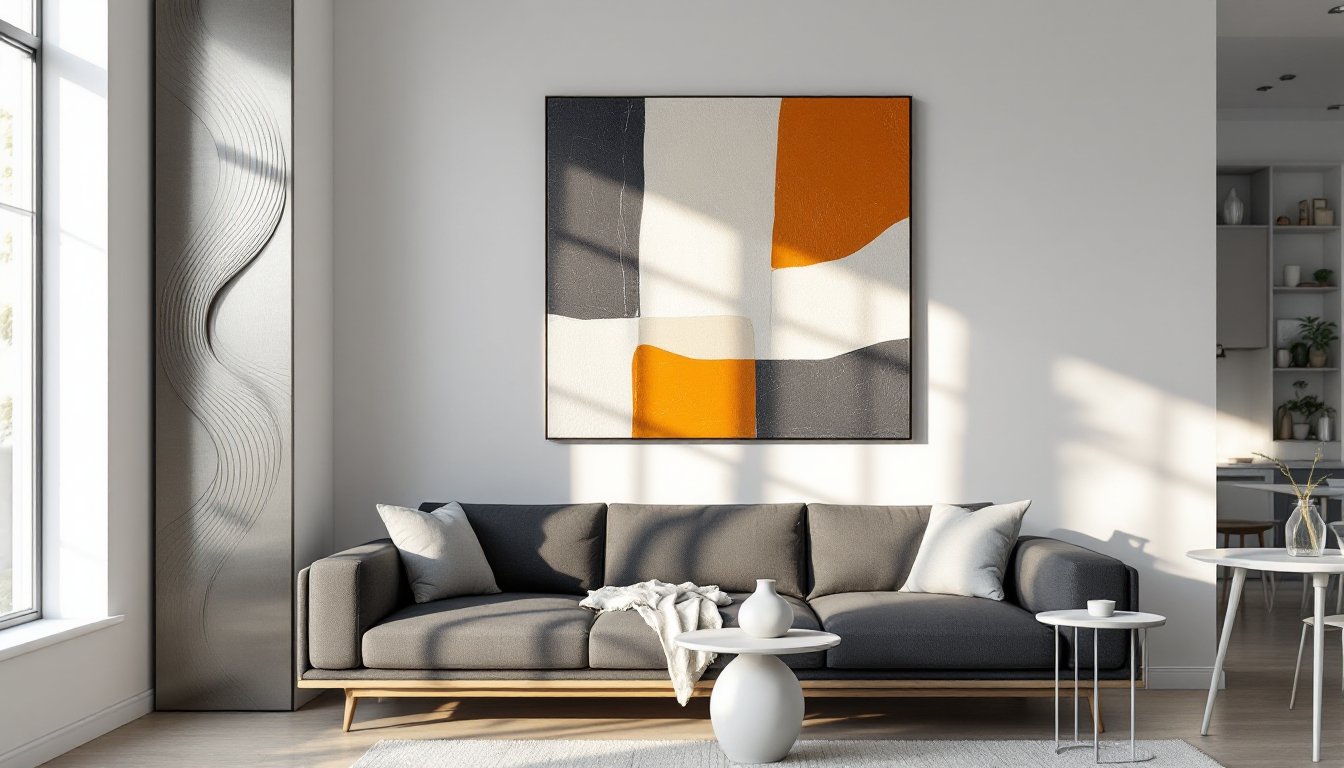
The practical advantage comes down to color and scale. A large abstract canvas can anchor a neutral room by introducing a controlled palette, say, burnt orange and charcoal, without overwhelming the space. Conversely, a small metal sculpture can fill an awkward nook beside a doorframe where a traditional painting would feel forced.
Abstract decor also sidesteps the subject matter debate. No one argues whether the beach scene fits a mountain cabin, or whether the portrait clashes with the sofa. This makes it especially useful in open-concept homes where multiple zones share sightlines. Many interior design ideas now emphasize this flexibility, especially in multipurpose living areas.
From a DIY perspective, abstract art is easier to hang level and position because there’s no “correct” orientation to worry about, unless the piece has a signature or obvious top edge. That tolerance for error makes installation less stressful for first-timers.
Popular Types of Abstract Wall Art for Your Home
Canvas Prints and Paintings
Canvas remains the most common substrate for abstract wall art. It’s lightweight, inexpensive to ship, and mounts easily with a picture hanger or two #8 screws into a stud. Pre-stretched canvases come with a wooden frame (stretcher bars) already attached, so they’re ready to hang out of the box.
When shopping, check the canvas weight. A 10 oz or 12 oz duck canvas holds up better over time than thinner poly-cotton blends, especially in humid climates where fabric can sag. Giclee prints, archival inkjet prints on canvas, offer crisp color and UV resistance. They’re a step up from poster-quality prints and typically include a protective coating.
Paintings done in acrylic or oil add texture. Brush strokes and palette knife marks catch light differently throughout the day, giving the piece depth that flat prints can’t replicate. If buying original work or commissioning a local artist, expect to pay more, but the tactile quality is noticeable from across the room.
Canvas panels (canvas glued to rigid board) are another option. They don’t require stretcher bars, so they’re more compact and less prone to corner damage during shipping. They do need a frame or float mount for hanging, though.
Metal and Wood Wall Sculptures
Three-dimensional abstract pieces bring a sculptural element that flat art can’t match. Metal wall sculptures, often laser-cut steel, aluminum, or brass, work well in modern and industrial spaces. They’re durable, easy to clean (a damp microfiber cloth does it), and many are designed for outdoor use, so moisture isn’t an issue.
Installation typically involves mounting brackets welded or riveted to the back. Use toggle bolts or molly bolts in drywall if you’re not hitting a stud. A 20-pound metal piece needs at least two anchors rated for 30 pounds each to account for dynamic load and prevent tipping.
Wood wall sculptures lean into natural texture. Layered plywood, reclaimed barn wood, or turned hardwood pieces introduce warmth. The downside: wood expands and contracts with humidity, so avoid hanging these directly above baseboard heaters or in uninsulated mudrooms. Seal raw wood with a clear polyurethane or Danish oil to prevent splitting and discoloration.
Both metal and wood sculptures often have standoffs, small spacers that hold the piece an inch or two off the wall. This creates shadow depth and makes the art feel more dynamic, especially with directional lighting from track or picture lights. Just be mindful of clearance when placing furniture: a sculptural piece that juts out 3 inches can interfere with a sofa pushed against the wall.
How to Choose the Right Abstract Wall Decor for Your Space
Start with wall dimensions. Measure the width of the wall or the furniture it’s hanging above. A common rule: the art should span two-thirds to three-quarters of the furniture width below it. For a 72-inch sofa, aim for a piece (or gallery grouping) between 48 and 54 inches wide. Going too small makes the wall feel unfinished: too large, and it visually crushes the furniture.
Height matters, too. In a room with 8-foot ceilings, center the artwork so its midpoint sits around 57 to 60 inches from the floor, roughly eye level for most adults. In rooms with higher ceilings or above furniture, adjust upward but leave at least 6 to 8 inches of clearance between the furniture top and the frame bottom.
Color selection should pull from existing decor but doesn’t need to match exactly. If the room has navy and gray, an abstract piece with navy, charcoal, and a pop of mustard can tie things together without being matchy. Bold abstract art decor often works best in neutral rooms where it becomes the focal point.
Consider the room’s function. In a bedroom, softer palettes, blush, sage, muted teal, promote calm. In a home office or entryway, high-contrast geometric abstracts can energize the space. For open-concept living areas, choose colors that harmonize with adjacent rooms visible from the main sightline.
Material choice impacts maintenance. Canvas and paper need protection from direct sunlight to prevent fading, UV-filtering glass helps if framing. Metal is virtually maintenance-free. Wood requires occasional dusting and, in dry climates, a light application of wood conditioner every year or two.
Finally, don’t ignore orientation. Horizontal pieces make narrow walls feel wider. Vertical pieces draw the eye upward, useful in rooms with low ceilings or narrow alcoves. Square pieces offer flexibility but can feel static: break them up with asymmetrical groupings if using multiples.
DIY Abstract Wall Decor Projects You Can Create This Weekend
Creating your own abstract wall art is more approachable than most homeowners assume. It doesn’t require drawing skills, just a willingness to experiment with materials and tools already in most garages.
Canvas and Acrylic Pour: Pick up a pre-stretched canvas (16×20 or 24×36 inches work well), a few bottles of acrylic craft paint, and a pouring medium from any craft store. Mix the paint with the medium in disposable cups, pour onto the canvas in layers, then tilt to let the colors blend. The randomness is the point. Let it dry flat for 24 hours. Seal with a spray acrylic sealer for durability. Total cost: under $30. Wear latex gloves: acrylic stains skin and clothes.
Geometric Wood Panel: Cut a piece of 1/2-inch plywood or MDF to your desired size using a circular saw (a table saw gives cleaner edges, but a guide jig works fine). Sand with 120-grit, then 220-grit sandpaper. Use painter’s tape to mask off geometric sections, triangles, chevrons, or irregular polygons. Paint each section with interior latex or acrylic paint. Pull the tape before the paint fully dries to avoid peeling. Mount using D-rings or a French cleat if the panel exceeds 10 pounds. Expect 3-4 hours of work including dry time.
Textured Fabric Wall Hanging: Stretch canvas or heavyweight cotton duck over a wooden frame (you can buy stretcher bars at any art supply store). Apply joint compound or texture paste with a putty knife or trowel, creating ridges and valleys. Let it dry overnight, then paint with acrylics or spray paint. The texture catches light and adds dimension. This method is forgiving, mistakes become “artistic choices.” Wear a dust mask when sanding dried compound.
Metal Patina Art: If you have access to a welder or know someone who does, cut abstract shapes from 16-gauge steel sheet using a plasma cutter or angle grinder with a cut-off wheel. Sand edges smooth with a flap disc. Apply a patina solution (available at metalworking suppliers) or use a propane torch to heat-treat the steel for color variation. Mount using L-brackets welded to the back. This project requires PPE: welding helmet, gloves, and ventilation. Not beginner-level, but achievable for intermediate DIYers with metal experience.
For all DIY projects, work in a ventilated area and lay down drop cloths. Acrylic and spray paints are low-VOC, but still produce fumes. Joint compound creates dust. Always test finishes on scrap material first.
Where and How to Hang Abstract Wall Art Like a Pro
The most common mistake is hanging art too high. As mentioned earlier, aim for the center of the piece to sit at 57 to 60 inches from the floor in most rooms. In dining rooms, where viewers are seated, drop that to 54 inches. In hallways, slightly higher works, around 60 inches, since people pass through standing.
To find the hanging point, measure the artwork’s height, divide by two, then subtract the distance from the top of the frame to the hanging hardware (wire, D-ring, or sawtooth hanger). Add that number to 60 inches (or your chosen center height), and mark the wall. That’s where your nail or screw goes.
Use the right hardware. For lightweight canvas (under 10 pounds), a picture hanger nail rated for 20 pounds is plenty. For heavier pieces or sculptures, locate a stud with a stud finder and drive a #8 wood screw 1.5 inches into the framing. No stud? Use toggle bolts (for hollow drywall) or plastic anchors rated for the weight. Don’t trust adhesive strips for anything over 5 pounds or in humid rooms, they fail.
Picture hanging wire is more forgiving than D-rings because it self-levels as you adjust. String it through two eye screws on the back of the frame, positioned one-third down from the top. Leave enough slack so the wire sits 2-3 inches below the frame top when taut.
Gallery walls require planning. Lay out the arrangement on the floor first, maintaining 2 to 4 inches of space between frames. Trace each piece on kraft paper, tape the templates to the wall, and mark nail holes through the paper. Remove the templates and hang. This avoids multiple nail holes from trial and error.
For sculptures or pieces that need to be level in all dimensions, use a laser level or a 48-inch bubble level. A piece that’s off by even a degree is noticeable, especially with geometric abstracts.
Lighting makes the difference. Place a directional picture light above the art or use adjustable track lighting positioned at a 30-degree angle. Avoid direct sunlight, which fades pigments over time. For high-value pieces, consider modern design solutions that incorporate LED strip lighting with diffusers, these mount behind the frame and create a subtle halo effect.
Finally, step back. View the piece from multiple angles and seating positions in the room. If it feels off, adjust before hammering in a second set of holes. Use a pencil for initial marks: they’re easier to erase than pen or permanent marker.